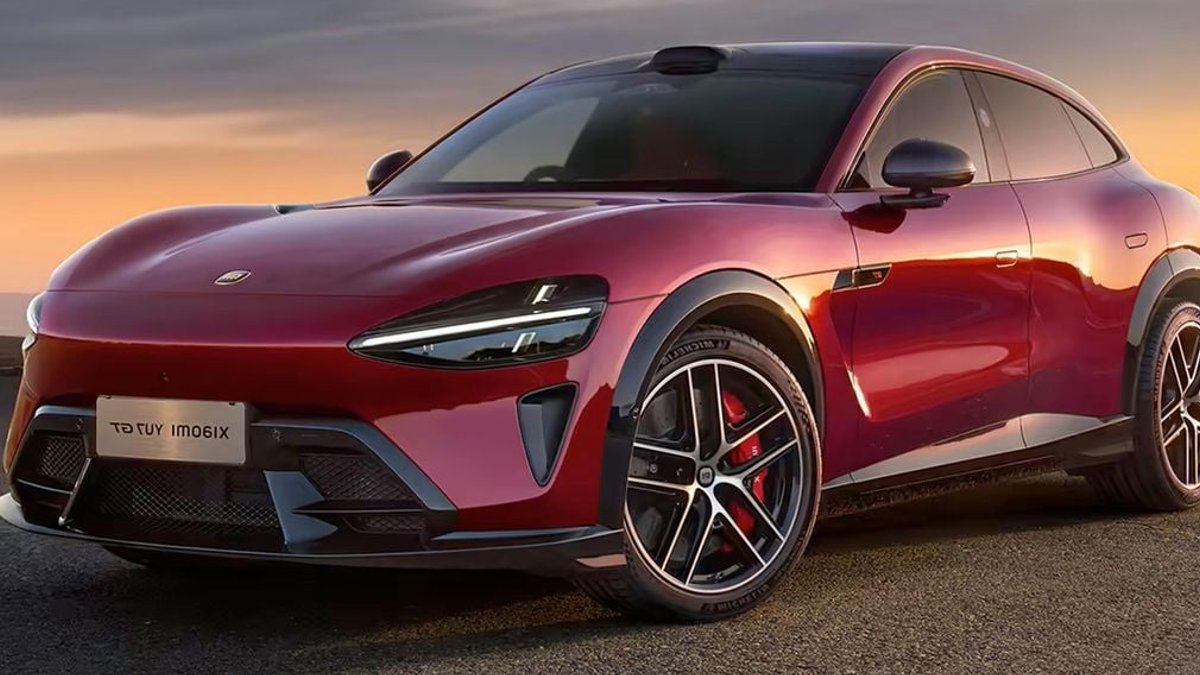
Chinese tech giant Xiaomi is poised to enter the Australian automotive market, with job listings for Sydney-based roles strongly suggesting the brand’s electric vehicles (EVs) and extended-range electric vehicles (EREVs) are headed Down Under. These listings, including a Senior Legal Counsel (Automotive) position, emphasize responsibilities like “automotive sales and after-sales legal matters”, further hinting at Xiaomi’s local ambitions.
Xiaomi’s global expansion plans
According to Chinese media reports, Xiaomi revealed at its 2026 investor day that it would begin its overseas expansion in the second half of 2027, starting with Europe, before launching in right-hand drive markets during the first half of 2028. This timeline positions Australia as a key target for Xiaomi’s automotive growth, given its right-hand drive market.
The company, known for its smartphones, launched its first vehicle, the SU7 sports sedan, in China in 2024. The SU7 Ultra, a rival to the Porsche Taycan and Tesla Model 3 Performance, boasts impressive specs, including a 0-100km/h time of 2.0 seconds and a top speed of 350km/h.
Its price in China of ¥529,900 (A$113,224) positions it competitively, well below the cheapest Taycan’s ¥918,000 (A$196,150) but above the Model 3 Performance’s ¥339,500 (A$72,542). In Australia, the Model 3 Performance is priced at $80,900 before on-roads, while the Taycan starts at $181,200 before on-roads. Notably, Xiaomi faced backlash in 2025 when it reduced the power output of the SU7 Ultra for existing owners, prompting an apology from the company.
Xiaomi’s automotive ambitions extend beyond sedans, with the YU7 SUV outselling the Tesla Model Y in China in January 2026. The YU7’s high-performance GT variant holds both the SUV lap record and the autonomous driving lap record at Germany’s Nürburgring race circuit. The brand also unveiled its SkyNomad extended-range SUV range in July 2026, featuring the N70 and N90 models, both built on the new ‘Xiaomi Kunlun’ platform with a flat floor and configurable seating.
Competitive market in Australia
Australia’s EV market is already highly competitive, with Chinese-made cars outsold vehicles from any other individual country for the first time in February 2026. The Tesla Model Y topped sales in May, becoming the first EV and Chinese-made car to claim the number one position. To the end of September 2026, Chinese-made vehicles accounted for 34.8 per cent of all new vehicles sold in Australia year-to-date.
The SkyNomad SUVs, with their EREV powertrains, could pose a challenge to rivals like the Zeekr 9X PHEV and Xpeng GX. The N70, priced from ¥209,900 (A$44,850) in China, measures 4960mm long and sits on a 2950mm wheelbase. It uses a 1.5-litre turbocharged four-cylinder petrol engine paired with one or two electric motors, delivering up to 310kW and an electric range of 505km (CLTC).
The larger N90, priced from ¥269,900 (A$57,670), offers a 3080mm wheelbase, a 5285mm body, and seven seats in a two-plus-two-plus-three layout. It shares the same powertrain family, with an electric range of 464km (CLTC) and a combined range of 1705km. In Australia, these models would directly compete with the Zeekr 9X and Xpeng GX, though Xpeng Australia has yet to confirm which powertrains will be offered locally.


