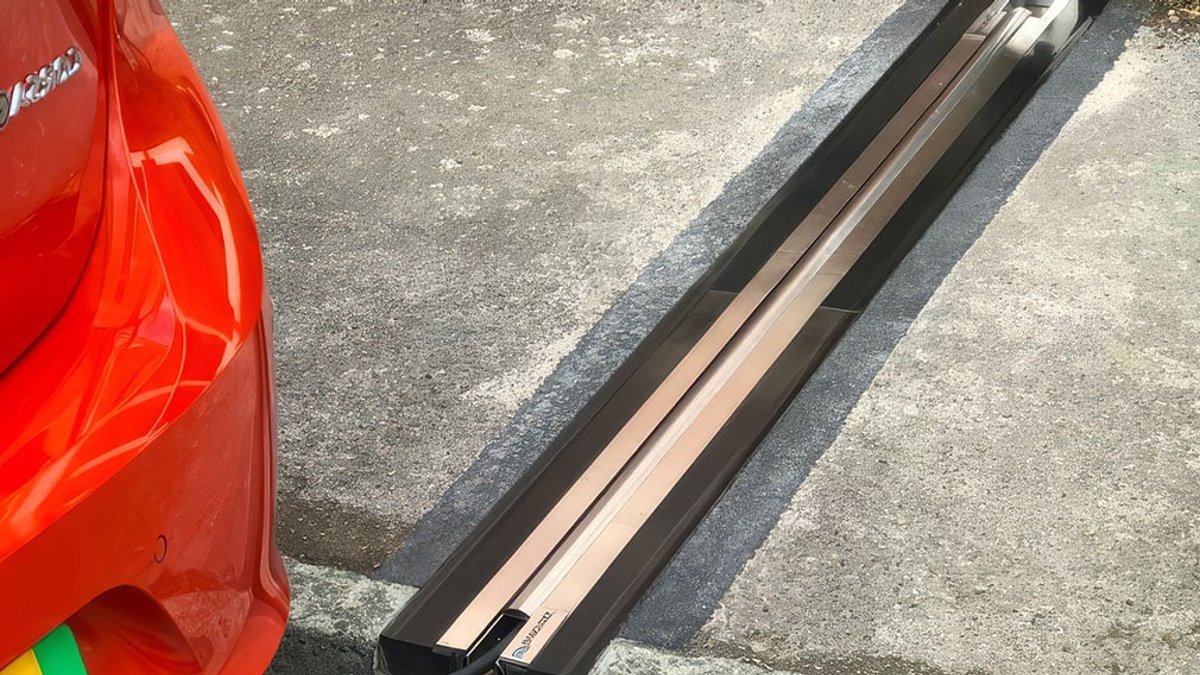
From 21 October 2026, England’s new permitted development rights will make it easier for households without driveways to install cross-pavement EV charging channels. This change, introduced by The Town and Country Planning (General Permitted Development) (England) (Amendment) (No. 2) Order 2026, removes the need for a separate planning application, potentially benefiting millions of street-parking households. The Order was made on 25 September 2026, laid before Parliament on 30 September, and comes into force on 21 October 2026.
Highway authority authorisation is still required, and the installation must meet specific legal conditions, such as a maximum installation height of 1.6 meters and ensuring at least 1.5 meters of footway remains between the charger and the carriageway. Where the wall adjoins a highway, the charger must not project more than 0.2 meters from the wall.
What the new rules mean for EV charging
Previously, households faced up to three permission hurdles: highway authority consent, planning permission, and street works permissions. The new rules remove the planning application step for qualifying installations, but the other permissions remain. Department for Transport guidance highlights that 8 million English households lack off-street parking, with 4 million having adequate on-street parking. However, factors like pavement width, underground utilities, and parking availability will determine the actual number of installations.
Read Also: Bentley Unveils Electric Torcal Car Model
An EV cable gully is a narrow channel embedded in the pavement, holding the charging cable during use. It differs from systems with permanently buried cables and kerb-side connectors. The new rules specifically define a cross-pavement solution as a pavement-embedded cable channel. Department for Transport guidance suggests councils may refer to standards like BS EN 124 and BS EN 1433 for strength and skid resistance.
Local implementation varies. Oxfordshire County Council offers a £300 installation package, while Somerset Council plans a controlled pilot in 2027. A Vauxhall survey found that 42% of responding councils either offer or plan to offer cross-pavement charging by 2026’s end. Of these, 7 had live schemes, 21 were at trial stage, and 28 were planning a roll-out. England’s previous £25 million EV pavement channels fund is now closed to new applications after allocations for 2025 to 2026.
The cost of an EV cable gully varies, with no national standard. The Electric Vehicle Chargepoint Grant covers 75% of eligible costs, up to £500, for qualifying households. However, this grant is for the chargepoint and installation, not the pavement channel itself. By 1 July 2026, the grant had funded only 59 sockets across the UK, including 31 in the previous 12 months.
The new rules do not guarantee approval or reserve parking spaces. Councils consider factors like pedestrian accessibility and underground utilities. Maintenance responsibilities may vary, so residents should review agreements carefully. The Department for Transport notes that these systems are most effective when residents can park near their property at least once a week, but this can be challenging in crowded areas.
Read Also: Smart Motoring Details Fact-Checking and Correction Process
To apply, start with your local highway authority. Check their website for relevant terms like “cross-pavement EV charging” or “on-street home charging.” The new rules do not force a council to run a scheme.
Local Implementation and Costs
Local councils are taking varied approaches to the new rules. Oxfordshire County Council offers a detailed plan, charging £300 for installation and the first two years of licensing, with an annual renewal fee of around £100. In contrast, Somerset Council is planning a controlled pilot for early 2027 and has not yet opened applications.
The grant is available across the UK, subject to scheme rules, and is scheduled to close on 31 March 2027.


