In 2026, electric vehicles are becoming the standard choice for UK drivers, driven by lower running costs, quiet performance, and tax advantages. But choosing the right EV can be daunting, with a wide range of models, battery capacities, and charging speeds to consider. Official WLTP laboratory test numbers rarely reflect real-world conditions, such as driving on a wet M1 motorway in cold weather, making it essential to consider practical performance data.
Key Metrics for UK Electric Car Buyers
Three core metrics determine an EV’s performance in everyday UK driving: usable battery capacity, miles per kWh (efficiency), and peak DC charging rate. Usable battery capacity, measured in kWh, represents the car’s true “fuel tank” size. Efficiency, or miles per kWh, is the electric equivalent of MPG in petrol cars, with more efficient models costing less to run. For instance, a model achieving 4.1 miles/kWh is significantly more cost-effective than one delivering 2.6 miles/kWh.
The peak DC charging rate, measured in kW, determines how quickly public rapid chargers can refill the battery on long journeys. A higher charging rate significantly reduces charging times, with a 10% to 80% charge taking around 22 minutes at 200kW, compared to nearly 50 minutes at 50kW. This difference is key for minimizing downtime during extended trips.
Top Electric Cars by Category
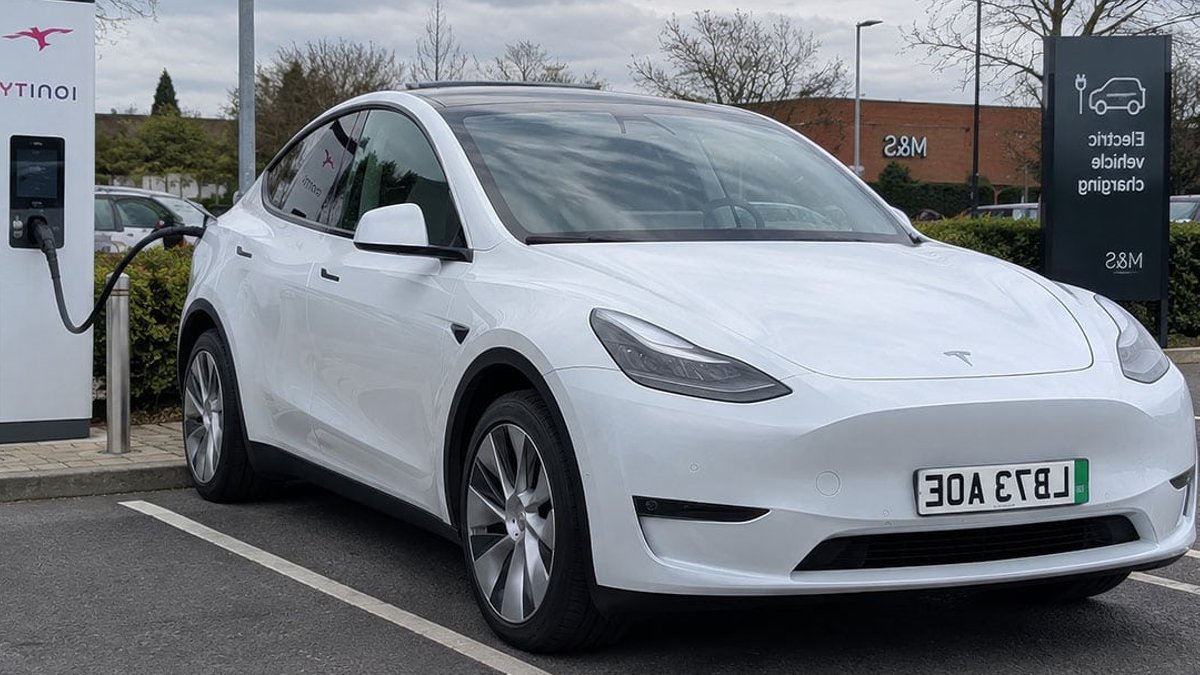
The Tesla Model Y is a top contender for UK families, offering seamless integration with the Tesla Supercharger network and a spacious 854-litre boot, making it ideal for long-distance travel. For those seeking a premium SUV, the Audi Q8 e-tron and Q4 e-tron lead the sector with refined luxury, plush air suspension, and superior build quality.
Affordable city hatchbacks like the MG4 EV, Fiat 500e, and Vauxhall Corsa Electric offer agile urban handling and sub-£30,000 price tags, appealing to budget-conscious buyers. Meanwhile, the BMW i4 lineup sets the benchmark for classic rear-wheel-drive trends, combining motorway refinement with predictable winter energy consumption, all without the noise of an internal combustion engine.
Real-World Efficiency and Charging Costs
Real-world efficiency data shows significant variations between models, with some achieving 4.1 miles/kWh and others pulling 2.6 miles/kWh. Charging costs depend on where and when you charge, with a full charge (~250 miles) costing between £5.25 and £63.00, depending on the charging location. For example, home charging with a smart wallbox can cost as little as £5.25–£6.75, while rapid public chargers may charge up to £63.00.
Installing a dedicated 7kW smart wallbox home charger allows for scheduled overnight charging on cheap night energy tariffs, reducing daily driving costs to around 2.5p to 3p per mile. This setup is more efficient than using a standard 3-pin domestic socket, which adds only ~8-10 miles of range per hour and stresses electrical sockets, making it less suitable for daily use.
Company Car Tax and Maintenance Savings
Maintenance costs for EVs are generally 30% to 40% lower over a 3-year ownership cycle due to the elimination of traditional mechanical wear points, such as timing belts, spark plugs, clutch assemblies, and exhaust systems. Lithium-ion EV batteries are designed to outlast the car’s mechanical lifecycle, with manufacturers providing an 8-year or 100,000-mile warranty guaranteeing at least 70% to 75% original capacity. Real-world UK driver data shows average battery degradation is only about 1% to 2% per year, meaning 150,000+ miles on an original battery pack is routinely achievable.
Environmental Impact and Winter Driving
Although manufacturing an EV battery pack carries a higher initial carbon footprint than building a standard petrol engine, over their full lifecycle, pure EVs generate roughly 65% to 70% fewer total greenhouse gas emissions. For winter driving, dual-motor All-Wheel Drive (AWD) models offer the best traction on icy roads by regulating power to individual wheels. However, single-motor rear-wheel-drive EVs also perform well in winter conditions, thanks to their low centers of gravity and instant traction management, especially when fitted with quality all-season tires. In conclusion, with their lower running costs, improved performance, and reduced environmental impact, electric vehicles are an attractive option for UK drivers.


