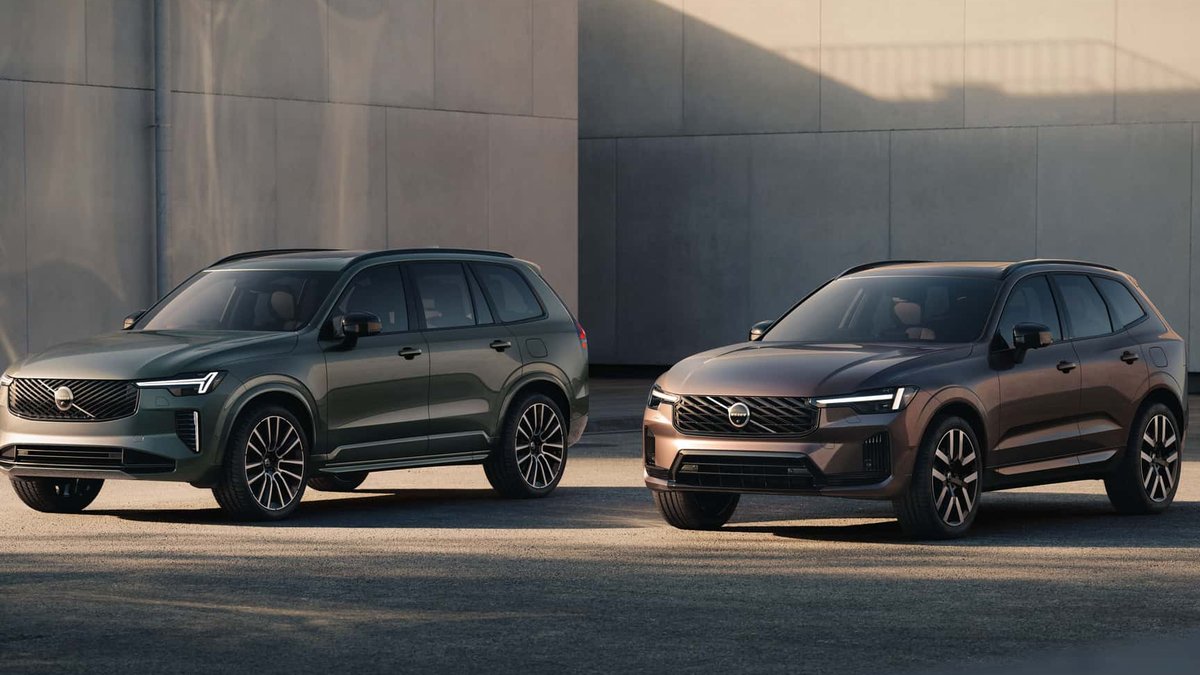
The 2028 Volvo XC60 and XC90 plug-in hybrids will deliver the longest all-electric ranges of any PHEVs available in the U.S., enabling drivers to cover most daily trips using battery power exclusively. The XC60’s electric range increases to 78 miles—exceeding the original Nissan Leaf’s 73-mile EPA-rated range—while the XC90 reaches 73 miles, up from 32 miles in its current version. Both vehicles double their battery capacity to 37.9 kWh, nearly matching the energy storage of dedicated electric vehicles while retaining the gas engine option.
This adjustment aligns with a broader trend in the automotive industry, where plug-in hybrids serve as a transitional step between gasoline-powered cars and fully electric models. Volvo revised its 2030 phaseout plan for combustion engines in 2024 after EV adoption stalled, particularly in the U.S., where charging infrastructure remains inconsistent. The updated XC60 and XC90—Volvo’s top-selling models, now offer a practical alternative for drivers unwilling or unable to switch to full electrification.
For most U.S. Volvo owners, the change presents clear advantages. The automaker highlights that its customers typically drive a median round-trip distance of 22 miles, with the majority traveling less than 30 miles daily. This means the new range can handle school drops, grocery shopping, and weekend trips without ever using gasoline. With fuel prices fluctuating due to global tensions, relying on residential electricity for daily commutes could cut costs while reducing engine wear over time.
However, the benefits depend on consistent charging. Research shows conflicting results: some owners rarely plug in, turning their PHEVs into gas-dependent vehicles, while others maximize electric range. A 2024 Toyota study indicated that North American PHEV owners do charge frequently, though doubts persist. Volvo has not confirmed whether the new models support fast charging, though Level 2 charging, common in home setups, will still require under six hours, only 14% longer than the previous battery despite its doubled capacity.
Redesigned SUVs with expanded performance and range
The updates go beyond range improvements. Both SUVs feature a 37.9 kWh battery (up from 18.8 kWh) paired with a 455-horsepower turbocharged four-cylinder and standard all-wheel drive. The XC60 also receives a refined exterior, including a sharper grille, updated headlamps, and modernized taillights, though its overall shape remains recognizable. Combined battery and gas range reaches 590 miles for the XC60 and 560 miles for the XC90.
Production begins this fall, with U.S. sales set for early 2027. This shift marks a strategic pivot: Volvo now treats electrification as a spectrum rather than a binary choice. The XC60 and XC90 provide a middle ground for drivers not yet ready for full electric vehicles.
Charging limitations slow down electric-only travel
The charging process will be more efficient, though key details remain unspecified. Volvo has not confirmed DC fast-charging capability, unlike competitors such as the Mercedes-Benz GLC 350e and Toyota RAV4 PHEV. The expanded 37.9 kWh battery can still recharge in under six hours using a standard Level 2 charger, a timeframe only 14% longer than the older battery. With a higher-output 16-amp home charger, owners can fully replenish the battery in around four hours, making overnight or weekend charging more feasible for those without public charging access. Without fast-charging support, long-distance trips relying solely on electric power may require more planning than fully electric Volvo models like the EX60, which can recharge in under 30 minutes at DC stations.
Pragmatic shift: PHEVs as the EV transition bridge
Volvo’s focus on plug-in hybrids reflects an industry-wide trend, treating PHEVs as a transitional technology. The company’s 2030 combustion-engine phaseout goal was scaled back in 2024, acknowledging uneven EV adoption, especially in the U.S., where charging infrastructure lags. The XC60 and XC90’s expanded electric range, now surpassing the original Nissan Leaf, positions them as a bridge for drivers not yet prepared for full electrification. CEO Hakan Samuelsson described the update as part of a “path to full electrification for every customer,” emphasizing that PHEVs complement the all-electric EX60 in the mid-size SUV segment. The strategy also signals pragmatism: Volvo is no longer betting solely on rapid EV growth but instead offering flexibility to customers still reliant on gasoline.
The XC60’s exterior updates modernize its appearance. The grille is now more squared-off, and the headlamps feature sharper contours, including refreshed Thor’s hammer daytime running lights. The tailgate and taillights have been refined for a cleaner look, though the SUV’s overall silhouette remains unchanged. Production of both models begins this fall, with U.S. deliveries starting in early 2027, marking the first time Volvo’s best-selling SUVs will offer this level of electric range in the American market.


