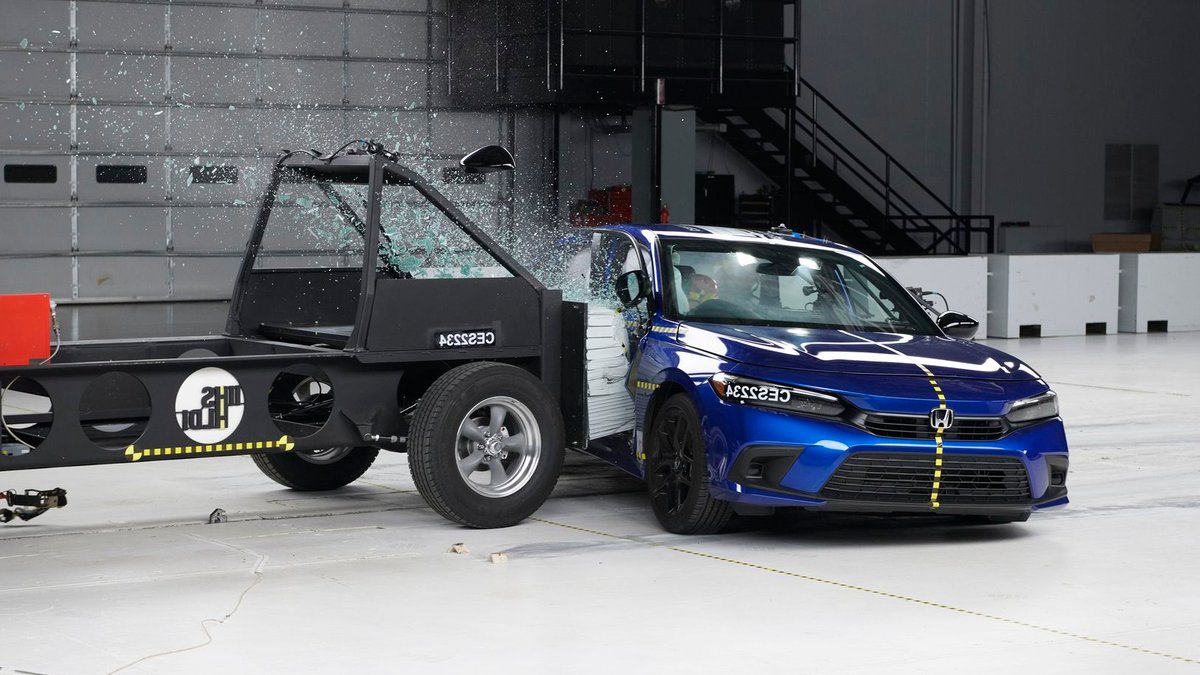
Driver death rates remain high for small and performance vehicles despite improvements in safety technology, according to a recent report from the U.S. Insurance Institute for Highway Safety. The study found that more than half of the 2023-model-year vehicles with the highest driver death rates are small cars, sports cars, or muscle cars. The agency suggests factors could include new or inexperienced drivers buying smaller, less expensive cars, or those in performance vehicles driving them aggressively.
Ranking the riskiest vehicles
The 2023 vehicle with the highest driver death rate was the Kia Rio, which is no longer sold in Canada or the U.S., with 170 deaths per million registration years (MRVY). The highest other-driver death rate was 204 MRVY for the Ram 3500 Crew Cab 4X4. While the estimated risks presented are for 2023-model-year vehicles, the data covered vehicles as far back as 2020 if they had the same design and features as the 2023 models.
Related: Car Connectivity Raises Security Concerns
Only driver deaths were considered in the numbers because all vehicles on the road have drivers, but not all of them have passengers or the same number of passengers. The IIHS said this study includes the properties of the vehicles themselves, rather than just the death rate across vehicle classes, and age and sex of the driver as its other crash studies consider. Other factors that can influence fatality rates include how many miles people drive per day and at what speed.
Average driver death rates reached 37 drivers per million registration years for insured 2023-model-year vehicles on the road for at least one year, while the average other-driver death rate was 53 drivers. The IIHS said the other-driver rate was “most likely higher… because many of the crash partner vehicles were of older vintage and offered occupants less protection.” An IIHS crash test between a 2026 Chevrolet Blazer and a 1996 Chevrolet Blazer Photo by IIHS
Why bigger vehicles are more dangerous
Unsurprisingly, the largest vehicles pose the most danger to other road users, and ten of the top-20 on the list of vehicles that killed other drivers in a crash are large trucks. “Even the safest small cars don’t fare well in crashes with large pickups and heavy SUVs,” said David Harkey, president of IIHS. “Powerful engines, and marketing that attracts aggressive drivers, is the issue for sports cars and muscle cars. They’re dangerous mainly because of how they’re driven.
Related: Alpine F1 teams up with Gucci
Luxury vehicles were relatively low, which the IIHS says may be because they have more driver-assist and occupant-safety features. All of these factors could possibly account for higher death rates in cheaper vehicles, and lower ones in luxury vehicles, with younger or new drivers buying less-expensive ones; luxury vehicles having more driver-assist safety features; or people working multiple jobs or double shifts may drive many more miles than others, and not be able to afford a pricier vehicle.
The non-profit agency has calculated driver death rates about every three years since 1989, and this is the second time it has included the “other-driver death rate,” which looks at the drivers in other vehicles in the crash. The researchers said this gave them a larger sample size, increasing the reliability of the results. They also only included vehicles with at least 100,000 registered vehicle years of exposure from 2021 to 2024, or at least 20 deaths. This meant that some lower-volume vehicles may have had similar characteristics to vehicles on the list, but weren’t included.


