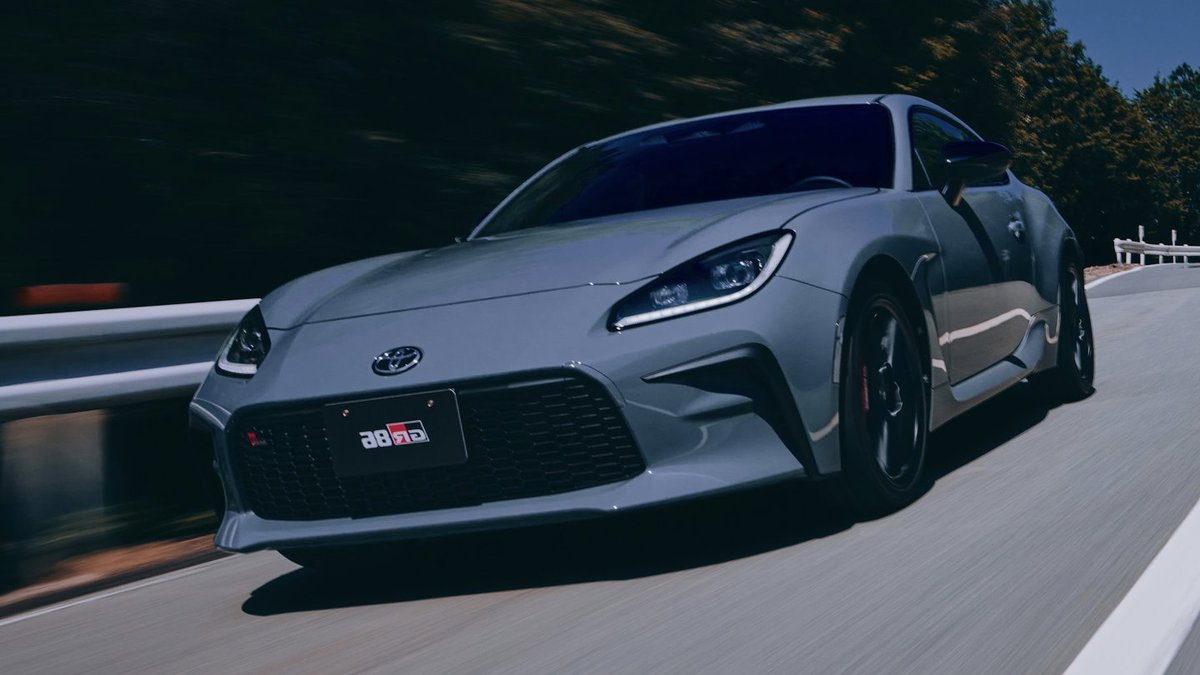
The Toyota GR86, a rear-wheel-drive sports coupe that disappeared from European showrooms years ago, has received a round of updates in Japan that reveal just how granular the carmaker’s performance division can get.
Most of the changes focus on driving trends. Throttle response has been recalibrated to feel more linear, particularly when accelerating out of corners or on slick surfaces. Toyota describes the adjustment as delivering “a smooth, freely controllable driving experience in any situation”—a claim that likely translates to slightly more forgiving power delivery for drivers pushing the car’s limits.
Tweaks for the track and the street
The electric power steering system has also been revised. Engineers reduced wheel wobble during high-speed cornering on uneven roads, a refinement informed by feedback from the GR86’s participation in Japan’s Super Taikyu endurance racing series. The car’s manual gearbox received the most fastidious update: a 0.5mm widening of the chamfer between fourth and fifth gears. Toyota insists the change improves downshift operability, though the difference may be imperceptible to most drivers.
These adjustments sit alongside more practical improvements. The GR86’s EyeSight safety suite now uses three cameras instead of two, expanding its field of vision to better detect obstacles at blind junctions. A new matte paint option, Solid Grey, returns after a seven-year hiatus—it was last offered on the previous-generation GT86 in 2017. Inside, some switchgear has been redesigned for better ergonomics.
Related: Seven Great Performance Cars That Died Too Soon
The updates extend to the GR86 Cup Car Basic, a stripped-down, steel-wheeled variant sold in Japan as a starting point for motorsport builds. For the first time, it’s available with an automatic transmission alongside the standard manual.
Price and availability
The revised GR86 is on sale now in Japan, priced from ¥2.936 million (about £13,800). There’s no indication yet whether these changes will reach other markets, including North America, or if Subaru will apply similar tweaks to the BRZ, the GR86’s mechanical twin.
Toyota’s approach here mirrors how Japanese tuners and racing teams have long obsessed over minute details—like shaving grams off a shift knob or adjusting suspension bushings by fractions of a millimeter—to extract marginal gains. The GR86’s updates may not transform the car’s character, but they reflect a commitment to refining a driver-focused machine, even in ways that might seem trivial to outsiders.
For now, the car remains a niche offering outside Japan. European buyers lost access to the GR86 when stricter emissions regulations forced its withdrawal, though it continues to sell in limited numbers elsewhere. Whether these latest tweaks will trickle down to other regions depends on demand—and Toyota’s willingness to certify the changes for local markets.


