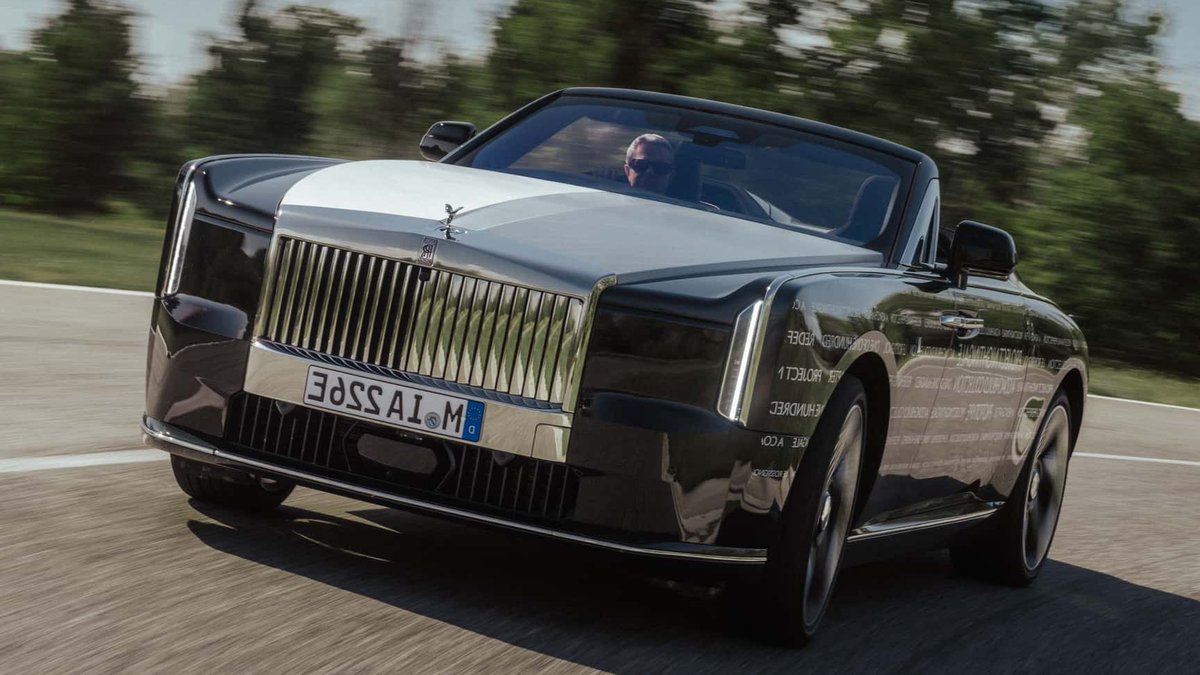
Rolls-Royce’s Project Nightingale has entered its practical testing phase, but its ultra-luxury specifications introduce a distinct engineering hurdle: maintaining a cashmere-lined retractable roof under temperatures reaching 176°F (80°C). The Coachbuild Collection model’s roof will undergo 10 distinct stress tests to validate fabric resilience, seal integrity, and mechanical stability, while the vehicle itself will complete a 350-week durability trial spanning Mediterranean highways, Arctic cold, and desert terrain. As part of the endurance testing process, prototypes are already driving in Southern Europe, extending a century-long tradition of European road testing where the brand first validated its luxury vehicles over 100 years ago.
The roof’s cashmere interior, combined with the model’s debut Piano Boot side-opening mechanism, demands extensive validation. Engineers will subject the roof to 10 distinct stress tests covering fabric resilience, seal integrity, and mechanical stability. The Piano Boot—an innovation for Rolls-Royce—will complete 15,000 operational cycles to confirm long-term functionality. The Piano Boot’s opening and closing mechanism is being tested to ensure it “never interrupts the perfect theater and effortless operation of this hallmark gesture for generations to come,” according to Rolls-Royce.
Unlike mainstream electric vehicles prioritizing efficiency or affordability, Rolls-Royce centers its development on material endurance and sensory perfection. The brand’s noise-reduction engineering, backed by 1,430 hours of aerodynamic simulation, eliminates artificial sounds, leaving only ambient noise in the cabin. High-speed trials up to 155 mph will also evaluate a bespoke electric wind deflector to minimize air turbulence. While some car manufacturers focus on making EVs more efficient and cheaper to build, Rolls-Royce has instead prioritized solving unique challenges like ensuring a cashmere-lined roof survives extreme temperatures and maintaining the flawless operation of the Piano Boot.
Read Also: VW ID. Buzz Completes 62,000-Mile Global Trip with 96% Battery
The limited-edition run of 100 units will share the Spectre’s aluminum spaceframe, delivering 600 horsepower and 800 lb-ft of torque from its dual-motor system. While exact pricing remains undisclosed, deliveries are scheduled to begin in 2028. The Nightingale marks Rolls-Royce’s first Coachbuild Collection model, built on the same Architecture of Luxury aluminum spaceframe as the electric Spectre.
Test routes include high-altitude drives up to 9,022 feet (2,750 meters), reinforcing the manufacturer’s tradition of validating luxury vehicles under extreme conditions. Prototype models are already undergoing real-world assessments on Mediterranean roads, where they will spend extended periods to ensure reliability in diverse climates.
Owners will receive a vehicle engineered not solely for performance but for lasting preservation. Every component, from the roof’s textile to the boot’s mechanics, is intended to remain functional across decades of ownership. For Rolls-Royce’s target market, the premium reflects a commitment to enduring quality over short-term cost considerations. Meanwhile, other luxury brands are introducing innovations like the 2027 Porsche Cayenne EV’s push-button door opening or Cadillac’s Escalade IQ’s Rolls-Royce-inspired customization options, while the Rolls-Royce Spectre undergoes updates and the Genesis GV90 redefines luxury with a lounge-like interior.


