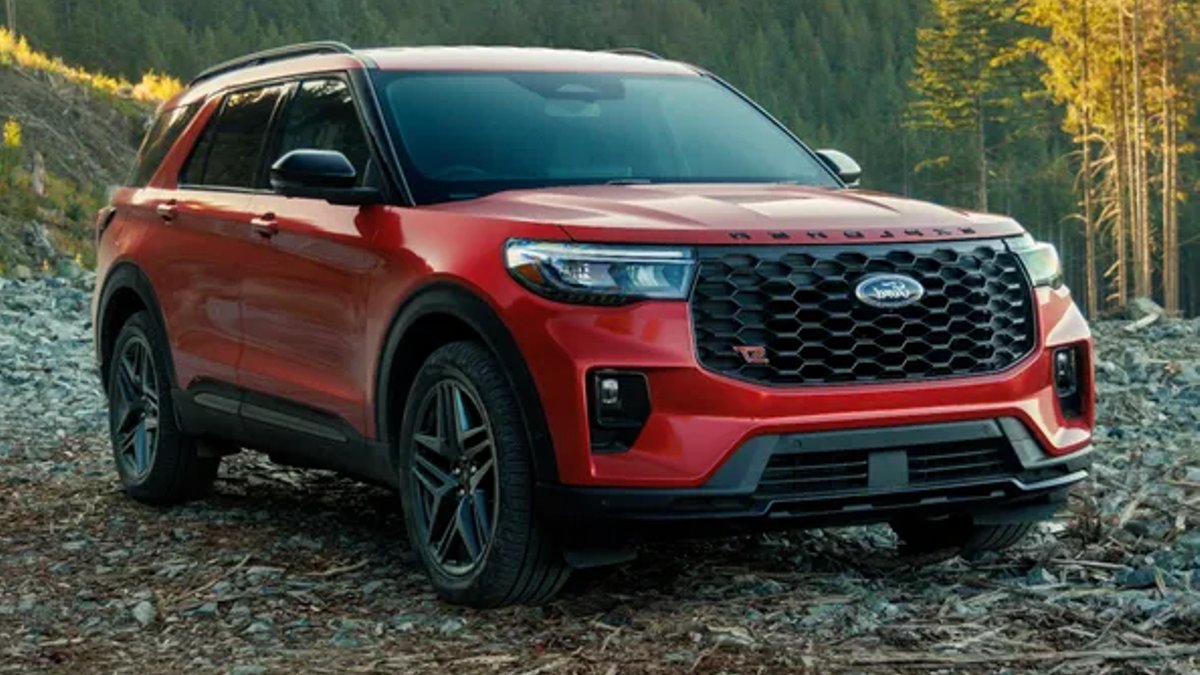
Ford has recalled nearly 388,000 Explorer and Lincoln Aviator SUVs due to a defect in second-row seat switches that can stick, causing seats to move unexpectedly.
Recall expands earlier action from June 2025
The recall includes certain 2020-2026 Explorer and 2020-2027 Aviator models produced between October 2018 and June 2026. The automaker expects all affected vehicles to have the issue, according to safety regulators.
Dealers will replace the second-row seat switch bezel and housing with a more durable design at no cost to owners. Interim notification letters will be sent on July 27, with final notices following in January 2027 once parts are available.
How the problem happens
The SUVs feature an “easy-entry” switch that folds and slides the second-row seat forward for third-row access. If the trim bezel around the switch becomes misaligned, the switch may bind or stick in the down position. This can cause the seat to tip or slide without warning, increasing the risk of injury—particularly in a crash.
Related: Ford and Geely form Spanish car venture
Ford became aware of the issue in April 2025 after safety investigators flagged two owner complaints about unexpected seat movement in 2022 Aviator models. The company launched an investigation, leading to a recall in June 2025 for nearly 305,000 vehicles.
Initially, the problem was attributed to incorrectly installed switch bezels. Dealers were instructed to inspect and replace them as needed, while the supplier was told to improve alignment during production.
In April 2026, Ford received five additional reports of unexpected seat movement in vehicles built after the first recall. A follow-up investigation confirmed that even properly installed bezels could still malfunction. Four of the reports involved vehicles that had already received the 2025 recall remedy.
Ford widens recall after more reports
Analysis of returned parts and warranty claims indicated the bezels could become misaligned through normal use. Some claims even described broken switch bezel tabs.
On July 7, the company’s Field Review Committee approved an expanded recall covering all vehicles from the 2025 action, plus those built after June 2025 through June 24, 2026—the date Ford switched to a revised switch bezel design.
Related: £430k Aston Martin Vanquish 25 celebrates legendary name
The updated remedy uses bezels with stronger retention. As of June 16, Ford had received 14 reports of unexpected seat movement—six from vehicles that had the previous fix and eight from those outside the original recall group.
No accidents or injuries have been linked to the defect.
The issue affects a feature designed to improve access to the third row, not create a hazard. These SUVs are commonly used for family trips, carpools, or transporting cargo, meaning the second row sees frequent use. A seat that suddenly folds or slides could startle passengers, especially children or those unprepared for the movement. Some vehicles continued to experience problems even after the first recall, raising concerns about the thoroughness of the initial fix.
Owners can check if their vehicle is affected by entering their VIN on Ford’s recall website.


