The current Paris Auto Show opened with a clear signal: China’s automakers have moved beyond seeking entry into Europe’s market—they now lead it. Of the 21 automakers exhibiting vehicles, 11 were Chinese, marking their expanding share in European sales. Chinese brands now represent nearly 12 percent of all new vehicle sales across the EU and UK, with projections showing they will surpass 1 million units sold this year alone.
What distinguishes them is not just their sales volume but their strategic approach. While Japanese and Korean manufacturers traditionally entered Europe through budget models before advancing upward, Chinese automakers are directly targeting premium and luxury segments from the start. Their SUVs and large sedans now feature interiors comparable to those of Mercedes-Benz, BMW, or Bentley, combined with cutting-edge technology—all delivered at price points that European brands find difficult to match.
The luxury segment showcased this shift most prominently. The Zeekr 9X, a hybrid SUV the size of a Range Rover, drew attention with its lavish interior and a price below that of a Cadillac Escalade IQL. Designer Fabrizio Guigiaro observed the unveiling and commented, “That,” he said, pointing to the near-empty Mercedes-Benz stand across the aisle, “is last century. This,” he said with a nod at Zeekr’s stand, “is next century.”
Not all automakers participated in the event. BMW, after issuing a profit warning in July citing a 30 percent decline in China sales and the impact of the Middle East conflict, chose to withdraw. Jaguar Land Rover also skipped the show entirely, focusing instead on direct consumer engagement. As a result, the Jaguar Type 01 concept, which had generated significant anticipation, remained unseen by most attendees.
Legacy brands adopt defensive strategies
For legacy automakers that did attend, the Paris Auto Show felt more like a defensive posture than an offensive push. Their displays were modest, emphasizing their continued existence amid the rising Chinese presence. However, a few brands demonstrated signs of resistance.
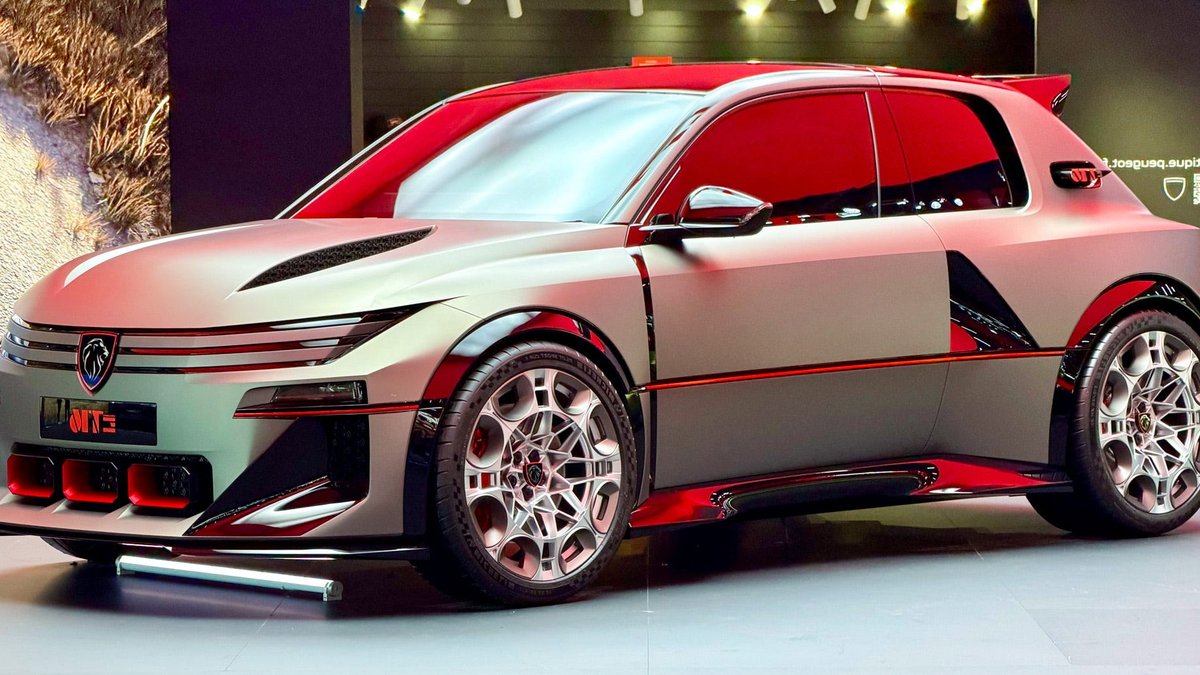
Stellantis made a strong showing with concept vehicles across its European brands, Alfa Romeo, Citroën, DS, Fiat, Lancia, Opel, and Peugeot, that rivaled the quality of past Geneva or Detroit exhibitions. Design chief Ralph Gilles framed the initiative as an effort to reclaim what Chinese automakers lack: distinctive design and brand heritage. “I can’t tell them apart,” he noted of the Chinese offerings. “We want to reaffirm our brands’ individual directions and change up their form factors. None of our cars look alike. They all have their own mission.”
The Alfa Romeo Cuorerosso concept, designed by Alejandro Mesonero, embodies this strategy. Built on Maserati’s Giorgio Sport platform, it features rear-wheel drive, a screen-free cockpit, and a 2.9-liter twin-turbo V-6 hybrid engine. Gilles described it as “a physical expression of the passion and performance” that defines Alfa Romeo, even as past models like the Tonale have faced criticism.
Ford attempted to differentiate itself with a rally-inspired marketing campaign. Its stand featured historic Ford rally cars alongside a Red Bull F1 replica, promoting a new slogan: “Ready, Set, Ford.” The brand announced five new European models by 2029, including a B-segment electric hatchback (built on Renault’s AmpR architecture) and a downsized, plug-in hybrid variant of the Bronco. However, without concrete evidence of what “rally-bred” performance entails, the promise felt more aspirational than grounded.
European automakers redefine electric and retro designs
The Volkswagen Group responded with a focused push to reassert its leadership in electric SUVs through the ID.Tiguan. This model represents a design evolution from the boxy ID.4, emphasizing refined styling and premium materials.
Audi took a different approach with the A2 E-Tron, a retro-styled electric hatchback blending 1980s design cues with modern efficiency. The concept uses lightweight materials and a compact electric powertrain, aligning with Audi’s strategy to compete in the growing B-segment market.
European Automakers Highlight Design and Heritage as Counter to Chinese Competition
The Renault Group and Stellantis brands presented concept vehicles that emphasized design innovation and brand identity. Stellantis showcased designs across Alfa Romeo, Citroën, DS, Fiat, Lancia, Opel, and Peugeot, aiming to differentiate from Chinese automakers by emphasizing heritage and craftsmanship. These displays included bold styling and mechanical focus, contrasting with the more technology-driven approach of Chinese competitors.
Alfa Romeo’s bold return to driver-focused engineering
Alfa Romeo’s Cuorerosso concept, for example, featured a rear-wheel-drive platform and a minimalist interior without screens. This approach highlighted driver engagement and performance, aligning with Stellantis’ goal to restore emotional connections to vehicles. The emphasis was on tangible attributes rather than digital interfaces, reflecting a shift toward traditional automotive values.


