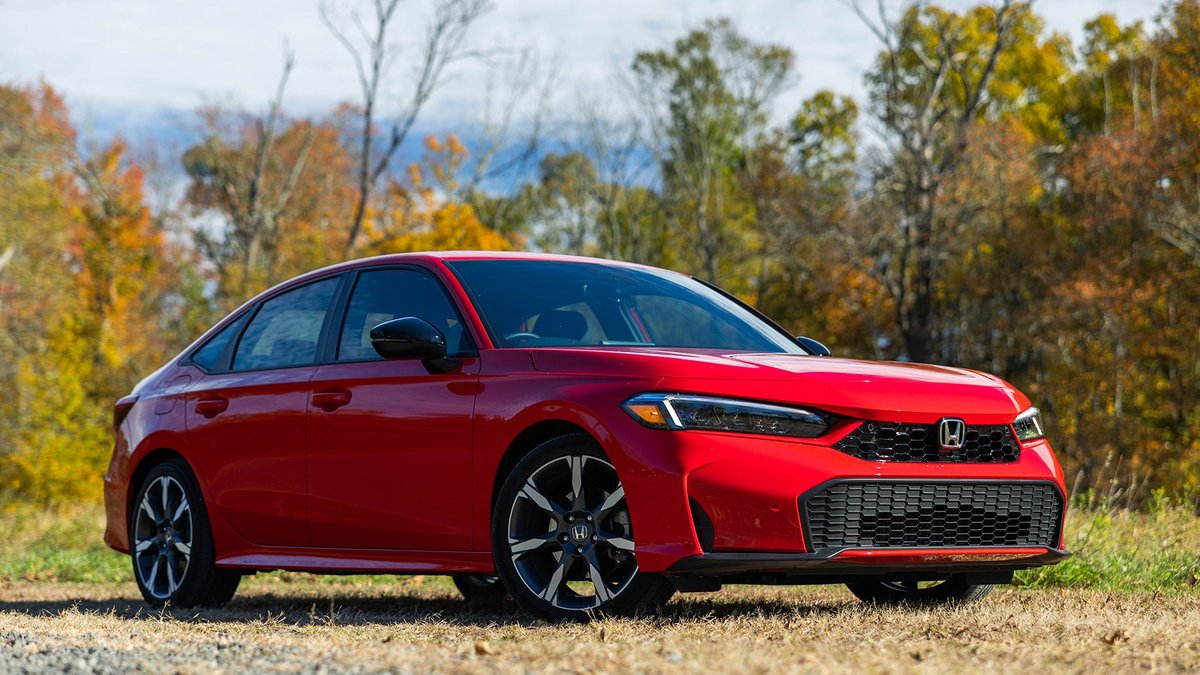
A yearlong test of the 2025 Honda Civic Hybrid Sedan confirmed one key insight: most drivers unknowingly buy more car than necessary. After 15 months and nearly 21,000 miles, the vehicle stood out for its reliability, fuel economy, and daily usability in the northeastern U.S., though its constraints became increasingly apparent over time.
The Civic Hybrid’s strengths begin with its core offerings: a hybrid powertrain, standard safety technology, and features that surpass those in far costlier models. Even in late 2026, it remained competitive against rivals like the Nissan Sentra, despite the Sentra’s lack of hybrid efficiency. Over 20,925 miles, the Civic achieved 44.1 mpg—slightly below the EPA’s estimate—while running on 87-octane fuel. Operating costs dropped to $0.08 per mile, undercutting the 2025 Kia K4 tested alongside it, despite the K4’s lower purchase price.
Maintenance demands were minimal, with two oil changes, tire rotations, and TPMS recalibrations totaling $237.66 for the year. The only significant issue involved rodent infestations behind the glove box, a recurring problem across Civic models. Dealers charged $446.81 to address the issue after musty odors developed.
For two adults in an urban environment, the Civic performed nearly perfectly. It handled cross-country trips, daily commutes, and errands without issue. While seats sufficed for short drives, they grew uncomfortable after prolonged use. The 12.3-gallon fuel tank required frequent refills despite the hybrid’s efficiency, and highway noise remained noticeable. The absence of a hatchback’s cargo flexibility was the sole practical shortcoming, occasionally necessitating a second vehicle for bulkier loads.
The car’s mechanical reliability extended beyond routine operation. It started consistently, maintained steady performance, and required no unexpected repairs. Honda’s long-standing reputation for durability held firm. Even the rodent-related issue, resolved through basic maintenance, failed to undermine the Civic’s overall dependability.
Why Most Drivers Overbuy Features They Never Use
The most important realization emerged from the car’s limitations. Features like a smaller fuel tank, basic seating, or the lack of all-wheel drive proved irrelevant in everyday use. Snow clearance relied on winter tires, cargo was distributed across vehicles, and the sedan’s compact size simplified parking and urban navigation. The test highlighted how many “just in case” features remain unused.
One winter afternoon, after a severe snowstorm, the Civic struggled on a steep driveway, an isolated instance where all-wheel drive might have helped. Otherwise, the car’s simplicity became its greatest asset. Without heated seats, premium infotainment, or unnecessary technology, it delivered exactly what was needed: a reliable, efficient machine free of superfluous distractions.
The car’s final assessment came during its return to the dealership after 15 months of daily use. Despite logging more miles than many competitors in a single year, it showed no signs of wear. The only visible damage, a faint scuff on the rear bumper from a parking misjudgment, cost under $20 to repair. The hybrid battery remained at full capacity, and service records revealed no issues beyond the rodent-related repairs.
Minor Quirks Don’t Outweigh Reliability and Simplicity
Despite its strengths, the Civic’s limitations occasionally surfaced. During a late-summer road trip, the rear seat’s lack of climate controls became apparent when transporting a dog in hot weather. The single cup holder also proved insufficient for longer journeys, requiring a portable cooler. These minor inconveniences paled beside the car’s overall dependability. The basic infotainment system managed navigation and media effectively, while physical climate-control buttons avoided touchscreen lag in cold conditions.
The Civic Hybrid’s greatest advantage was its straightforward design. Unlike competitors with complex tech suites, it required no learning curve. Advanced driver-assistance features, adaptive cruise control, lane-keeping assist, and automatic emergency braking, operated flawlessly without intrusive alerts. The car’s balanced weight distribution and low center of gravity ensured stability on winding roads, surprising some testers who expected a hybrid to feel underpowered. In reality, the electric assist provided immediate torque, eliminating the delay of conventional gas engines.


