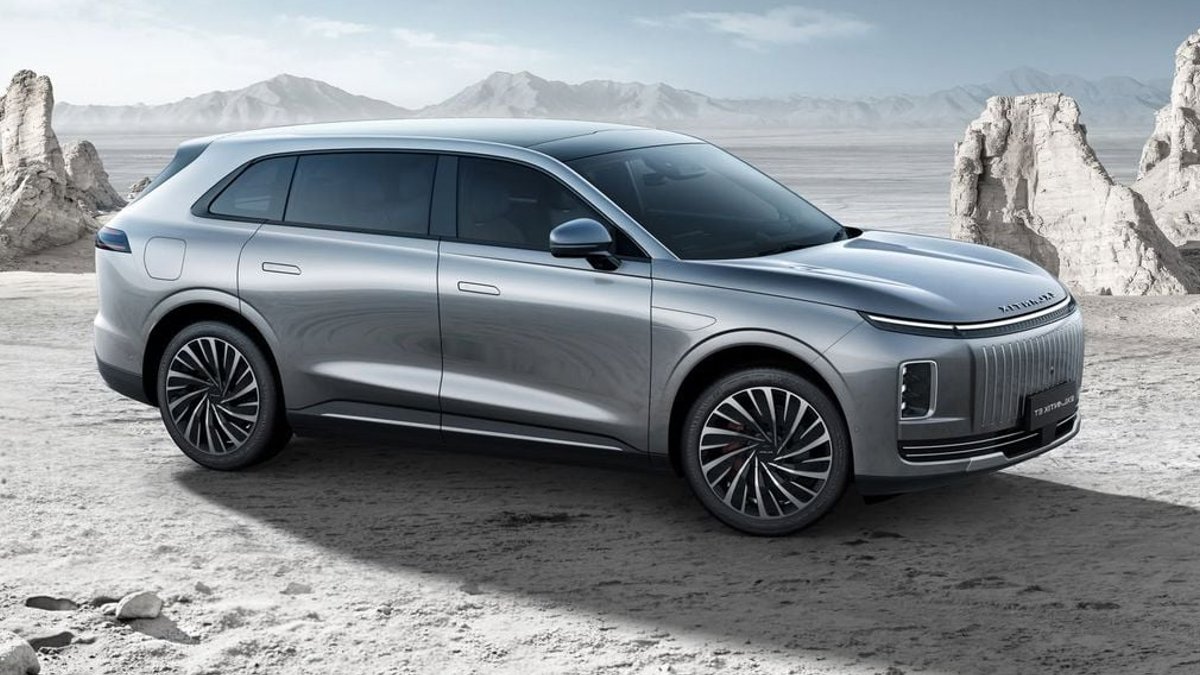
Chinese automaker Chery is positioning its premium lineup, including the Lepas, Exlantix, and Luxeed brands, as a potential alternative for buyers frustrated by the slow electric transition among established luxury brands. All three are scheduled for Australia by 2027, targeting consumers drawn to advanced powertrains.
Zhang Guibing, president of Chery International, highlighted the disparity in adoption rates among legacy automakers. While many premium brands continue prioritizing internal combustion engines, he argued that wealthier buyers increasingly favor electric and hybrid systems. Zhang admitted that without distinct innovation, new premium entrants would struggle to compete. Chery’s strategy centers on differentiation, beginning with Lepas, its first Australian launch.
The Lepas L6 BEV Signature, an electric SUV, will debut in November 2026 at a starting price of $47,990 before on-road costs. Equipped with a 65kWh lithium iron phosphate battery and a claimed 440km WLTP range, it sits between Chery’s existing models and traditional luxury brands like BMW or Mercedes-Benz. A plug-in hybrid version is planned for 2027.
Two additional brands will follow: Exlantix, arriving in the first half of 2027, will introduce the ES GT shooting brake and ET SUV, both displayed in right-hand drive configurations. Luxeed, set to launch in the second quarter of 2027, will begin with the LLounge, a people-mover concept powered by a range-extender system combining electric motors with a petrol generator. Final pricing and specifications for these models have yet to be confirmed.
Chery’s expansion coincides with a surge of Chinese premium brands entering the Australian market. Geely’s Zeekr launched in 2024, while BYD’s Denza began deliveries in early 2026. Changan’s Avatr and FAW’s Hongqi (HQ) are expected to arrive in 2027, reinforcing the challenge to German luxury dominance.
This push mirrors past disruptions in the premium segment. Toyota’s Lexus entered Australia in 1990, followed by Nissan’s Infiniti in 2012 before its exit in 2020. Hyundai’s Genesis debuted in 2019 with petrol-only sedans before expanding into electric SUVs. Zhang noted that Genesis initially struggled due to reliance on technology similar to its parent brand, a pitfall Chery seeks to avoid.
September sales figures show Chinese brands’ growing presence. Zeekr sold 2,050 vehicles, while Denza moved 385. In comparison, BMW sold 2,152 and Lexus 951, though Genesis lagged with 66. Legacy luxury brands are accelerating their own electric shifts, with BMW’s iX3 50 xDrive featuring an 800V system, 400kW DC charging, and a 43.3-inch display. Lexus’s RZ550e incorporates steer-by-wire technology and simulated gear shifts.


