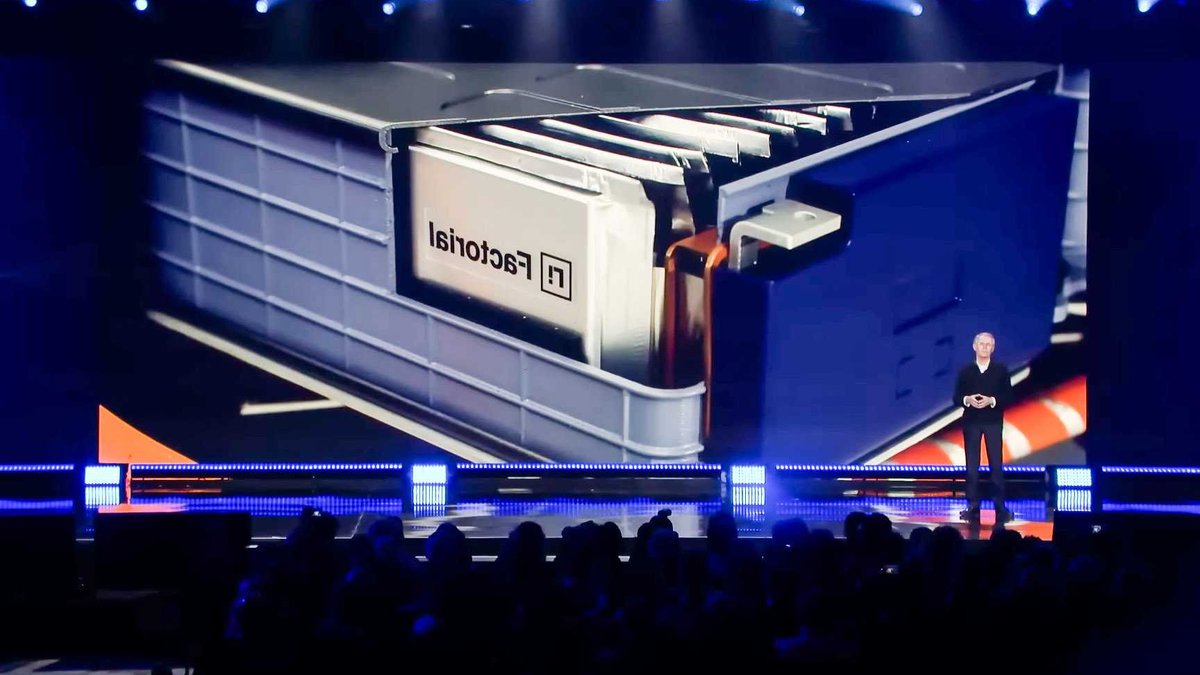
A Massachusetts-based battery startup is taking a different approach to developing all-solid-state batteries by assembling a team of specialized manufacturers instead of trying to build the technology alone.
Factorial Energy announced a joint development agreement with Mitsui Kinzoku, a Japanese firm specializing in solid electrolytes. This partnership follows a series of similar deals the company has made in recent months, including agreements with Posco Future M (a Korean anode and cathode specialist), SK On, Volkswagen Group’s PowerCo, and Hyundai Motor Group. The company also has a memorandum of understanding with Phil Energy for advanced manufacturing tools.
Unlike traditional lithium-ion batteries, which rely on flammable liquid electrolytes, all-solid-state batteries replace that liquid with a solid material. This change could eliminate fire risks, improve energy density, and enable faster charging. However, the technology has faced persistent technical hurdles, while lithium-ion batteries continue to improve in range, speed, and cost.
Factorial CEO Siyu Huang emphasized that no single company can solve the challenges of all-solid-state batteries alone. The startup’s strategy involves bringing together firms that specialize in different components, anodes, cathodes, electrolytes, and manufacturing, to accelerate development.
Read Also: Rivian R2 Unlocks New Colors, Interior Options for Buyers
“We’re driving a very strong coalition among all of the supply chain,” Huang said. “There are still significant technical challenges to unlock. It’s very important for us to go beyond the existing mindset and framework for lithium-ion and focus on a technology that goes beyond.”
The partnership with Mitsui Kinzoku is particularly critical for Factorial’s Solstice all-solid-state battery. Huang noted that access to Mitsui’s solid electrolytes enhances battery performance, particularly in high-temperature stability, a feature Factorial says it couldn’t achieve without the collaboration. The company claims to hold foundational intellectual property for all-solid electrolytes, positioning it as one of the few firms with such expertise.
Factorial’s two main products are the FEST semi-solid-state battery and the Solstice all-solid-state cell. Both use anode-free lithium-metal cells paired with solid or semi-solid electrolytes. The semi-solid version achieves up to 375 watt-hours per kilogram of energy density and has already been tested in prototype vehicles, including a Mercedes-Benz EQS and a Dodge Charger Daytona. The all-solid-state version targets 450 Wh/kg, roughly double the energy density of today’s lithium-ion cells.
While neither product is yet in mass production, Huang said the semi-solid-state technology is ready for commercialization. Karma Automotive plans to be the first to roll out a production electric vehicle with Factorial’s semi-solid battery in 2028. The company also secured its first commercial aerospace order this summer for a drone battery. Huang expects larger automakers to adopt the technology in the coming years, though timing will depend on their specific requirements.


