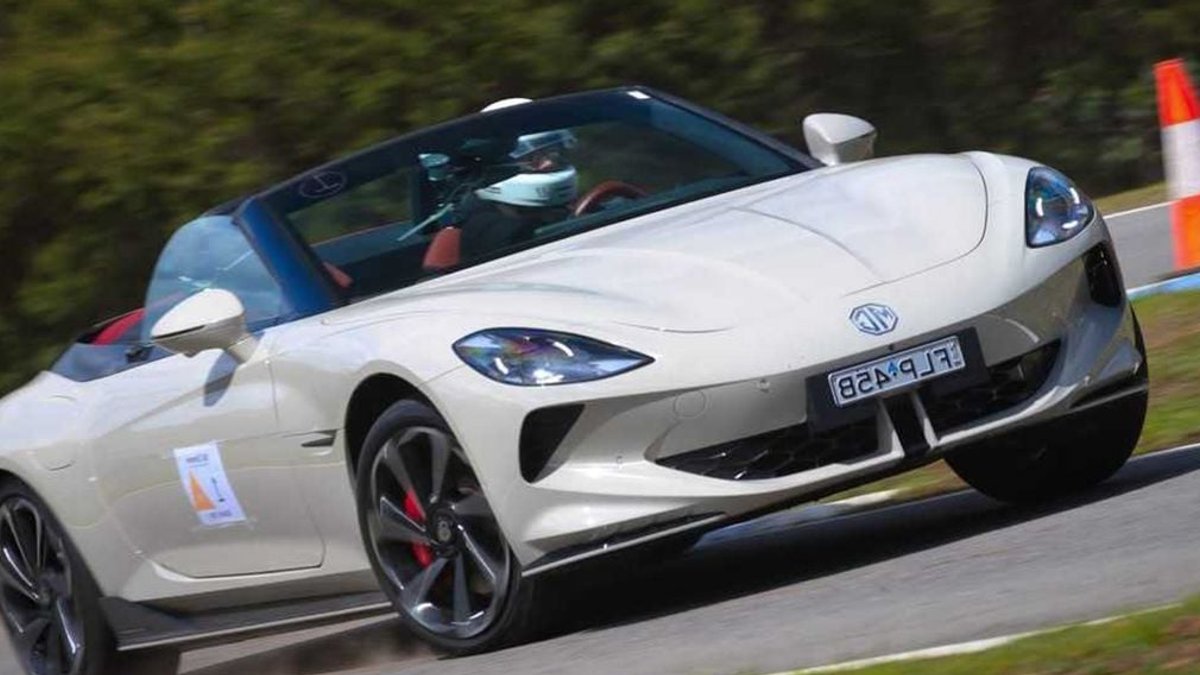
Two distinct cars competed at the Rob Roy Hillclimb. The first, a 1936 MG SA saloon, featured rear-wheel drive, a two-tone brown exterior, wire wheels, and a small two-piece windscreen. It used leaf springs, four-wheel drum brakes, and an inline 2.5-litre six-cylinder engine producing around 100 horsepower. The second, a modern MG Cyberster, was a soft-top convertible with scissor doors, large wheels, all-wheel drive, and a digital two-seat interior. This electric vehicle used dual motors to generate 375kW of power and 725Nm of torque, claiming a 0-100km/h time of 3.2 seconds. While the older car had a manual gearbox without synchromesh, the Cyberster operated without gears.
Racing up a historic track
Rob Roy, often overlooked, holds significant historical value. The hill climb began in 1937, ranking among the world’s oldest alongside UK venues like Prescott and Shelsley Walsh. Notable racers, including three-time Formula 1 champion Jack Brabham and touring car legend Norm Beechey, have competed there. For this event, a local MG office sent its only available Cyberster to Melbourne, which the CarExpert team drove. The 607-metre track included a chicane added to the 2026 layout to manage faster vehicles. With a one-in-three incline, drivers aimed to complete the hill climb as quickly as possible from a standing start.
Mike Ellsmore, who has run the Rob Roy hill climb event in his 1957 MGA around 150 times, noted that getting off the line with minimum wheelspin is key. Starting with 350km of range, the writer activated Launch Control via Super Sport mode on the steering wheel. With the roof down, the car launched without wheelspin.
Electric vehicles like the Cyberster have transformed hill climbing. The writer likened the transition from the saloon to the Cyberster to swapping a World War I biplane for an F35 fighter jet. The car’s regenerative braking was set to its lowest level for coasting, and the Brembo brakes performed reliably. The track ends with a concrete pad where drivers must carefully position their wheels to avoid going off the edge.
Related Post: Electric cars cheaper to run than gas cars in Europe
The Cyberster’s rapid acceleration saw each piece of road swallowed up so quickly that the writer ended up just clumsily putting the car in the best spot possible as their mind could barely keep up. As they hung on to the red leather-wrapped steering wheel, the track dropped away on corner exit, where the general advice was to stay on that line and not take a traditional wider corner exit, before a sharp rise presented a different challenge. The drop before the sudden rise saw plenty of cars go off, and the writer didn’t want to call MG to report that they’d return most of the car, but not quite all of it.
Comparing two eras of MG
The MG Cyberster, a modern electric roadster, demonstrated its capabilities at Rob Roy Hillclimb. Its performance highlighted its power and handling, contrasting sharply with the 1936 MG SA Saloon the writer drove on the same track in 2025. The older car, with its manual gearbox and leaf springs, presented a different challenge.
Competing with electric rivals
The event featured a variety of electric vehicles, including other models. Despite a debut run of 33.75 seconds, the writer improved to 29.46 seconds in the final attempt. The Cyberster’s performance showcased its potential, leaving the writer motivated to refine their technique for future events.
With regenerative braking set to its lowest level, the Cyberster allowed for coasting and precise speed control. Its Brembo brakes provided reliable stopping power, key for managing the track’s challenges, such as the concrete pad at the causeway’s end.


