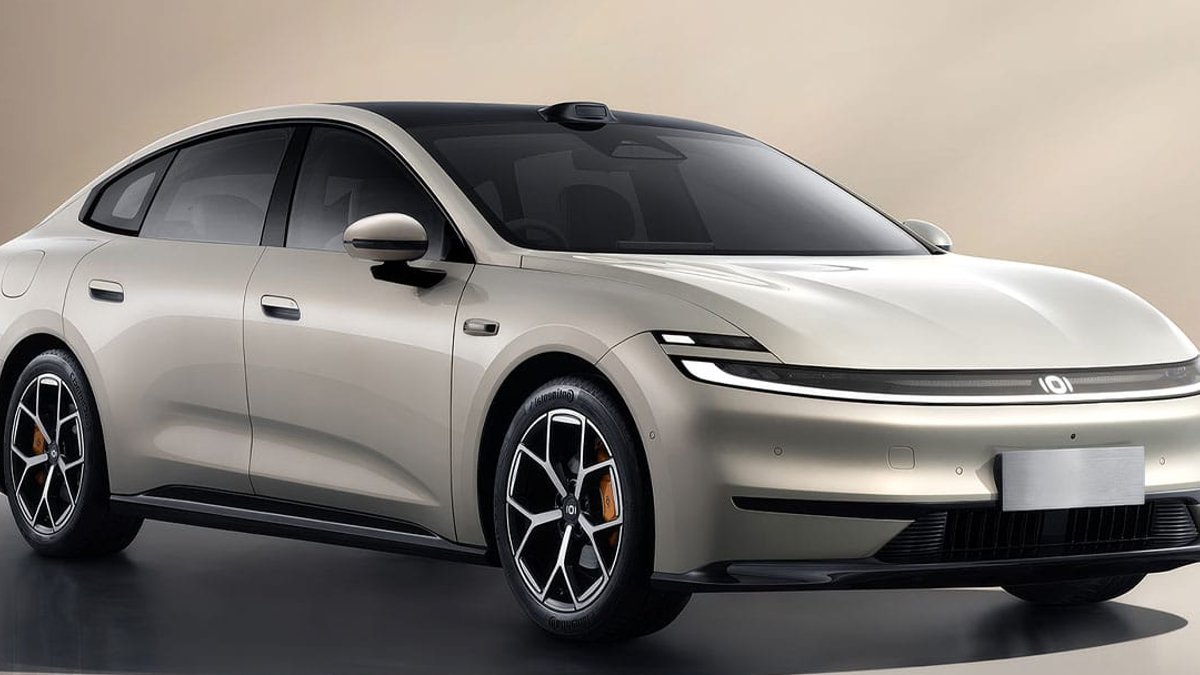
The sodium-ion battery has long been labeled as a cheaper option to lithium-ion, though in 2026 that description is becoming outdated. CATL and Changan have now installed a 175Wh/kg sodium-ion system in the Nevo A06 passenger vehicle program. According to reports, CATL states Naxtra has reached GWh-scale industrialization, and on 9 September 2026, SAE International released J3335, a recommended set of tests specifically for sodium-ion cells used in electric road vehicles.
Technical standards rarely serve as good decor, yet they indicate when engineers anticipate a technology to cease being a mere laboratory novelty. The more compelling narrative is that sodium-ion has become credible enough to prompt questions regarding where it outperforms lithium-ion, which types of EVs should utilize it, and if it can reduce vehicle costs without turning every trip into a range calculation.
Sodium-Ion Batteries: A Credible Alternative
The concise response is that sodium-ion batteries are entering commercial EV use because they excel in frigid temperatures, eliminate the need for lithium as the charge carrier, and could diversify supply chains. Their primary drawback is reduced energy density. The IEA places leading sodium-ion cells at roughly 175Wh/kg, compared to up to 205Wh/kg for current LFP and 265Wh/kg for NMC.
CATL’s Naxtra achieves the 175Wh/kg benchmark and is being co-developed by Changan for passenger cars, although no sodium-ion EV is yet confirmed for the UK. A sodium-ion battery functions as a rechargeable type where sodium ions move between the positive and negative electrodes during charging and discharging. Its operating principle is largely comparable to that of lithium-ion.
The distinction lies in the specific ion being transported. Sodium is plentiful and widespread, making it strategically appealing in an industry that has long worried about lithium costs, graphite processing, and the concentration of critical mineral supply chains. However, sodium ions are heavier and larger than lithium ions, meaning current cells store less energy for the same mass and volume.
This technology is most applicable when its specific benefits outweigh the need for maximum energy density. Budget-friendly short-range cars, vans, urban fleets, and vehicles for freezing climates are obvious choices. The IEA now characterizes sodium-ion batteries as entering a scaling phase. CATL claims it has achieved GWh-level industrialization for Naxtra after solving manufacturing issues.
Comparison with Lithium-Ion Batteries
The relevant comparison is not sodium against a hypothetical generic lithium battery. The majority of budget EVs now utilize LFP, while NMC remains key where energy density and performance justify its more complex material composition. Current cell-level energy density benchmarks indicate that sodium-ion possesses lower density than LFP and NMC.
The true benefits of sodium-ion EV batteries are thermal performance and supply chain variety. The IEA notes that the newest cells can retain approximately 90% of nominal capacity at -40 degrees C and function at temperatures as high as 70 degrees C. CATL reports that Naxtra provides nearly triple the discharge power of a comparable LFP battery at -30 degrees C.
In the middle of this development, it’s worth considering the broader context: as the world shifts towards electric vehicles, the demand for batteries is increasing, and the need for alternative technologies like sodium-ion is becoming more pressing. The fact that CATL, a major player in the industry, is investing in sodium-ion technology suggests that this alternative is being taken seriously.
The latest milestone is less flashy but arguably more telling. On 9 September 2026, SAE International issued J3335, establishing common electrical, mechanical, thermal, and safety test procedures for sodium-ion propulsion cells in BEVs, hybrids, and similar road vehicles. This document provides engineers a unified method for testing and comparing sodium-ion cells, marking a major step toward commercialization.
As of 17 September 2026, no sodium-ion passenger EV has been confirmed for UK sale, but the progress made by CATL and other companies suggests that this may change in the near future. The IEA says current lithium prices are not high enough for sodium-ion to undercut LFP in most applications, but the strategic advantages of sodium-ion, including its potential for supply diversity and temperature performance, make it an attractive alternative for certain use cases.
The energy density of sodium-ion batteries is still a significant disadvantage, with a cell needing more mass than a LFP cell to store the same amount of energy. However, companies like CATL are working to improve the energy density of sodium-ion batteries, and the IEA says that the latest cells have made significant progress in this area.
Manufacturing problems, such as moisture control and gas generation in hard carbon, have been addressed by CATL. The company says full-scale mass production of Naxtra is due by the end of 2026.
CATL‘s energy-storage division has commissioned large sodium-ion production lines and announced a 60GWh three-year supply agreement with HyperStrong. This agreement indicates that sodium-ion batteries are being considered for grid storage applications.
Sodium-Ion Batteries in the Market
The IEA warns that the processing of materials for sodium-ion batteries can be geographically concentrated. Nearly all existing sodium-ion manufacturing capacity is in China, and China accounts for more than 95% of installed and announced 2030 capacity.
CATL’s Naxtra can support more than 10,000 cycles, and the company has quoted 500km of vehicle range for the passenger battery. However, these figures are technology and vehicle claims for the Chinese market and should not be converted directly into a British showroom range.
Sodium-ion batteries have a lower energy density than lithium-ion batteries, but they offer advantages in temperature performance and supply diversity.
This makes sodium-ion batteries a viable option for vehicles used in cold climates.
CATL has achieved GWh-level industrialisation for Naxtra after addressing manufacturing problems.


