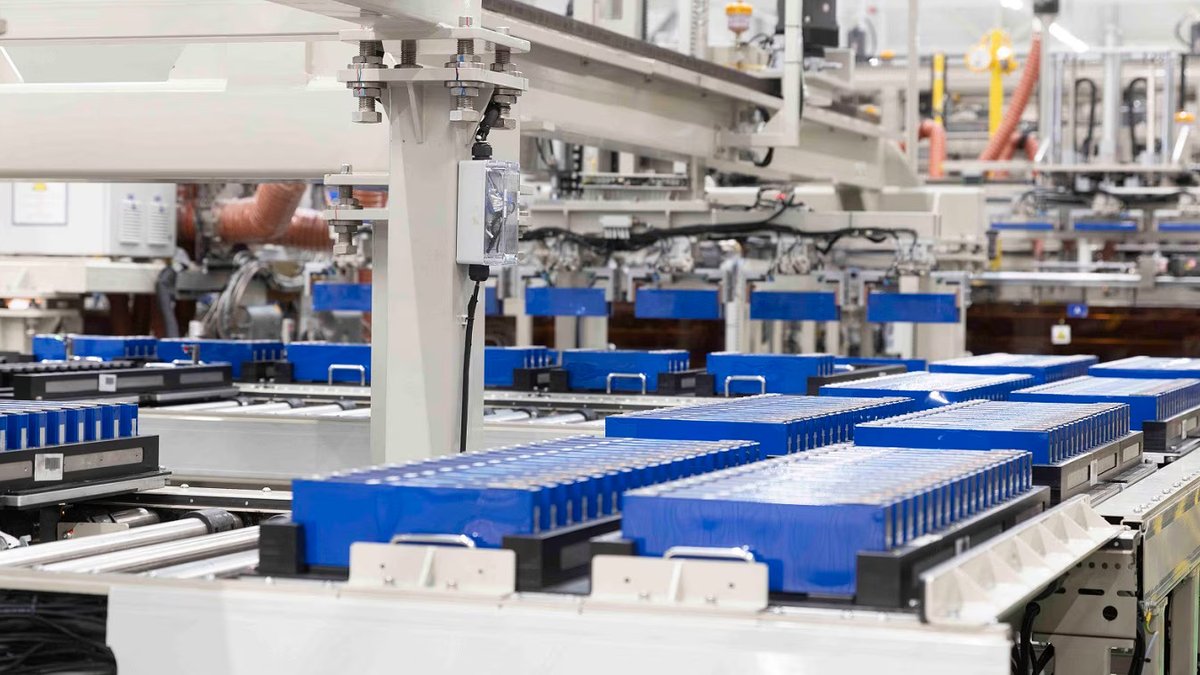
A recent analysis by Transport & Environment (T&E) suggests that the European Union will have sufficient ‘Made in EU’ battery cells by 2030, contradicting claims made by the automotive industry. The EU has been discussing draft proposals for the ‘Industrial Accelerator Act’ (IAA), which aims to boost production and competitiveness within the European Union.
The IAA includes Local Content provisions that would prioritize ‘Made in EU’ electric vehicles (EVs) in public procurement and funding programs. The European Commission plans to introduce special conditions for local value creation in the EU for traction batteries in electric vehicles.
European Battery Cell Production
The European Automobile Manufacturers’ Association (ACEA) has published a study examining the European battery supply chain’s ability to meet the requirements of the legislative package. The study found a significant gap, with ACEA arguing that there is a time lag in building new battery factories. A new battery factory can take nearly a decade to reach full-scale industrial production, and even projects launched today may not reach full capacity until around 2035.
According to T&E’s study, European cell production will already be sufficient by 2027 to fully cover the demand for funded company cars and a significant portion of funded private cars. By 2030, both segments could be supplied with enough European battery cells, provided that projects with a medium probability of implementation are also realized.
Local Content Requirements
However, a quarter of the cell capacities announced since 2022 have been cancelled or put on hold, with Germany being particularly affected. The country’s project pipeline for 2035 has been halved, according to T&E.
Related Post: Dacia to Launch Electric Hipster Microcar in Europe 2027
Ownership Structure of European Cell Production
The ownership structure of European cell production is notable, with more than 85% of active capacity owned by non-European companies. South Korean manufacturers account for 72% of production, with companies like LG Energy Solution, Samsung SDI, and SK On operating cell factories in Poland and Hungary.
Chinese battery giant CATL also has a significant presence in the EU, with a factory in Arnstadt near Erfurt and a second European factory in Debrecen, Hungary, which has just started test production. The production location, rather than the manufacturer’s country of origin, is what matters for the ‘Made in EU’ requirements.
Susanne Goetz, Senior Advisor for E-Mobility at T&E Germany, stated that “Germany is already a relevant location in the European battery ecosystem and has great potential.” Xavier Sol, Director Sustainable Investments and Batteries at T&E, added that “a strong European battery value chain won’t build itself – the competition from Asia is simply too large.”
Gaps in Precursor Materials
T&E advocates maintaining the planned cell and CAM requirements of the Industry Accelerator Act and introducing minimum quotas for pCAM and anode active material from 2032 onwards. Although 529,000 tonnes of annual European capacity have been announced for 2030, only around 177,000 tonnes remain after weighting projects by their probability of implementation.
This would help ensure security of supply, create jobs, and promote economic resilience in the EU. For more information on the European battery industry and the Industry Accelerator Act, visit the Transport & Environment website.


