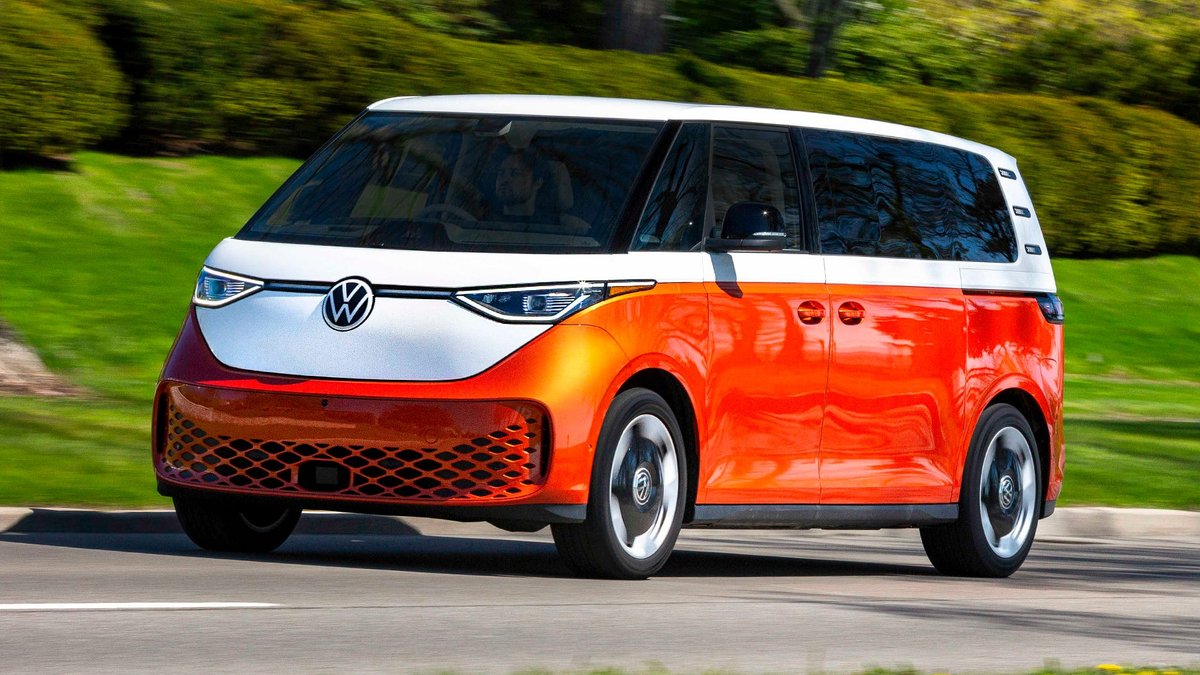
Volkswagen’s electric ID.Buzz has faced challenges in the U.S. market since its 2025 introduction, despite its nostalgic design. The original model’s starting price of $61,545 and top-tier cost of over $70,000 placed it well above traditional minivans like the Honda Odyssey ($44,690) and Toyota Sienna ($42,000). Its range of 230 miles and 200 kW charging capability also fell short of competitors, prompting Volkswagen to halt U.S. sales for the 2026 and 2027 model years. A return is scheduled for 2028, but the next iteration will require substantial changes to achieve market viability.
New Platform, New Potential
The current Buzz uses Volkswagen Group’s MEB architecture, launched in 2019, which has constrained its performance and efficiency. The 2028 model will transition to the company’s Scalable Systems Platform (SSP), a unified system replacing both MEB and PPE. This change could reduce production expenses and enhance software integration across Volkswagen’s electric lineup, from slower-charging models like the Buzz to faster-charging vehicles such as the Porsche Taycan. The platform may also enable software-driven charging optimizations, ensuring consistent performance without hardware limitations.
The Buzz’s nickel-cobalt-manganese (NCM) batteries have been costly and heavy. The 2028 version will switch to lithium-iron-phosphate (LFP) chemistry, which is more affordable and lighter. While LFP batteries often struggle in cold conditions, the new Buzz will incorporate onboard heating and higher-voltage charging systems to mitigate those issues. At optimal temperatures, LFP batteries can charge essentially as quickly as any other chemistry, and some Chinese manufacturers are preparing LFP packs that can accept 1 megawatt of charging power—1,000 kW.
Volkswagen CEO Thomas Schäfer acknowledged the Buzz’s pricing is a major obstacle. He noted that the van “is on the wrong cost base. That makes it difficult to be successful,” while also emphasizing its “iconic” status. The question now is whether these updates will be sufficient to restore competitiveness.
Price Reduction as a Priority
The Buzz’s high price remains its greatest challenge. To achieve meaningful sales volume, it must fall below $50,000, aligning with competitors like the Kia EV9 ($56,545). Even with potential additions like a short-wheelbase version, already sold in Europe, the vehicle may struggle without a substantial price cut.
Future Prospects
The Buzz’s success depends on two key areas: cost control and performance gains. The SSP platform and LFP batteries address the first, while software upgrades, charging infrastructure, and avoiding past errors will determine the second.


