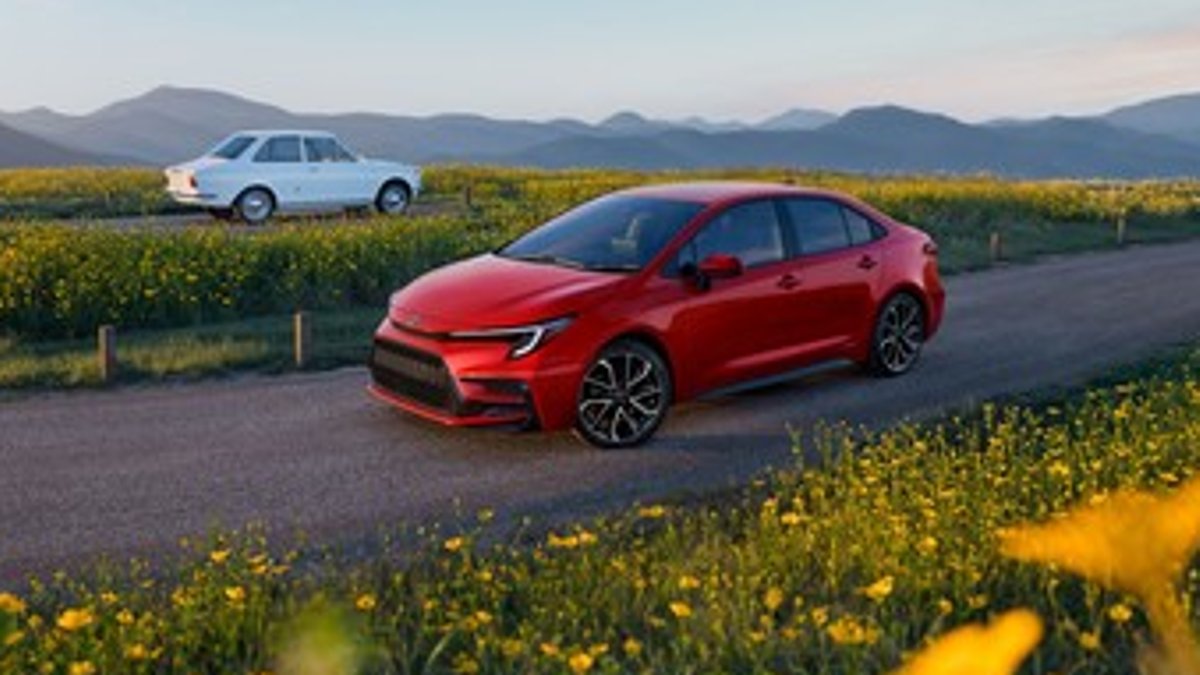
The 2027 Toyota Corolla will mark six decades since the nameplate’s introduction with a commemorative limited-run variant, the 60th Anniversary Special Edition. Derived from the SE Hybrid trim, the model distinguishes itself through bespoke design elements both externally and within the cabin, though Toyota has yet to disclose specific pricing or customer deliveries beyond early 2027.
Exclusive styling for a milestone
The 60th Anniversary Special Edition departs from the standard SE’s visual identity by replacing conventional badging with anniversary-specific emblems positioned on the front fenders and rear decklid. The two available exterior colours—Classic White and Supersonic Red—serve distinct roles: while Classic White maintains a connection to the Corolla’s heritage as one of the model’s original hues, Supersonic Red is reserved exclusively for this edition, ensuring no other Corolla variant will share its appearance. The 18-inch machined black-finished alloy wheels, described by Toyota as a nod to earlier iterations of the current twelfth-generation design, feature a multi-spoke pattern that balances modern aesthetics with retro influences. The wheels’ black finish contrasts with the polished machined surfaces, creating a layered effect.
Inside, the cabin’s revisions extend beyond cosmetic updates. The sport seats incorporate black and red fabric inserts arranged in a geometric pattern, with red accents concentrated along the bolsters and headrests. The 60th Anniversary door sills feature laser-etched metal plates bearing the edition’s logo, while matching floor mats embroidered with the same insignia reinforce the model’s exclusivity. The infotainment system’s upgrade to a 10.5-inch touchscreen—measuring 2.5 inches diagonally larger than the SE’s standard unit—improves visibility for navigation and media controls. The inclusion of the JBL premium audio system, typically reserved for the XSE grade, introduces a 10-speaker configuration with a dedicated subwoofer.
Limited availability, hybrid powertrain
Toyota has capped production at 250 units for the Canadian market. While the standard 2027 Corolla is scheduled to reach dealerships this fall, the anniversary variant is expected in early 2027.
The SE Hybrid powertrain remains mechanically unchanged from the standard offering, combining a 1.8-litre naturally aspirated four-cylinder engine with a permanent-magnet synchronous electric motor. The gasoline engine, which operates on the Atkinson cycle for improved thermal efficiency, produces 97 horsepower independently, while the electric motor contributes an additional 71 horsepower, with both sources routed through a continuously variable transmission. The system’s combined output of 138 horsepower places it mid-pack among compact hybrids, though the Corolla’s focus on efficiency over outright acceleration is evident in its 5.3 L/100 km fuel consumption rating. Standard equipment across all 2027 Corolla models includes Toyota Safety Sense 3.0, which bundles adaptive cruise control, lane-keeping assist, and automatic emergency braking with pedestrian detection, alongside wireless Apple CarPlay and Android Auto integration.
The Corolla’s six-decade production history traces a trajectory from its origins as a basic, rear-wheel-drive economy car to its current position as a hybrid-centric compact sedan competing in a segment increasingly dominated by crossovers and battery-electric vehicles. The 60th Anniversary Special Edition, with its hybrid powertrain and limited production run, offers a tangible link to the model’s past while adopting contemporary propulsion.
Pricing details for the anniversary edition will be released closer to its 2027 launch. Prospective buyers will need to await these figures before making purchasing decisions, though the model’s limited availability suggests that demand may outpace supply.
Broader industry trends, including ongoing trade negotiations and regulatory developments, could shape the Corolla’s future iterations. Auto trade talks between nations often influence manufacturing decisions, tariffs, and supply chain logistics, all of which can affect vehicle pricing, feature availability, and even the viability of certain powertrain options in specific markets.


