
Is Auto News Still Relevant? 37 Facts About the Future of Automotive Journalism
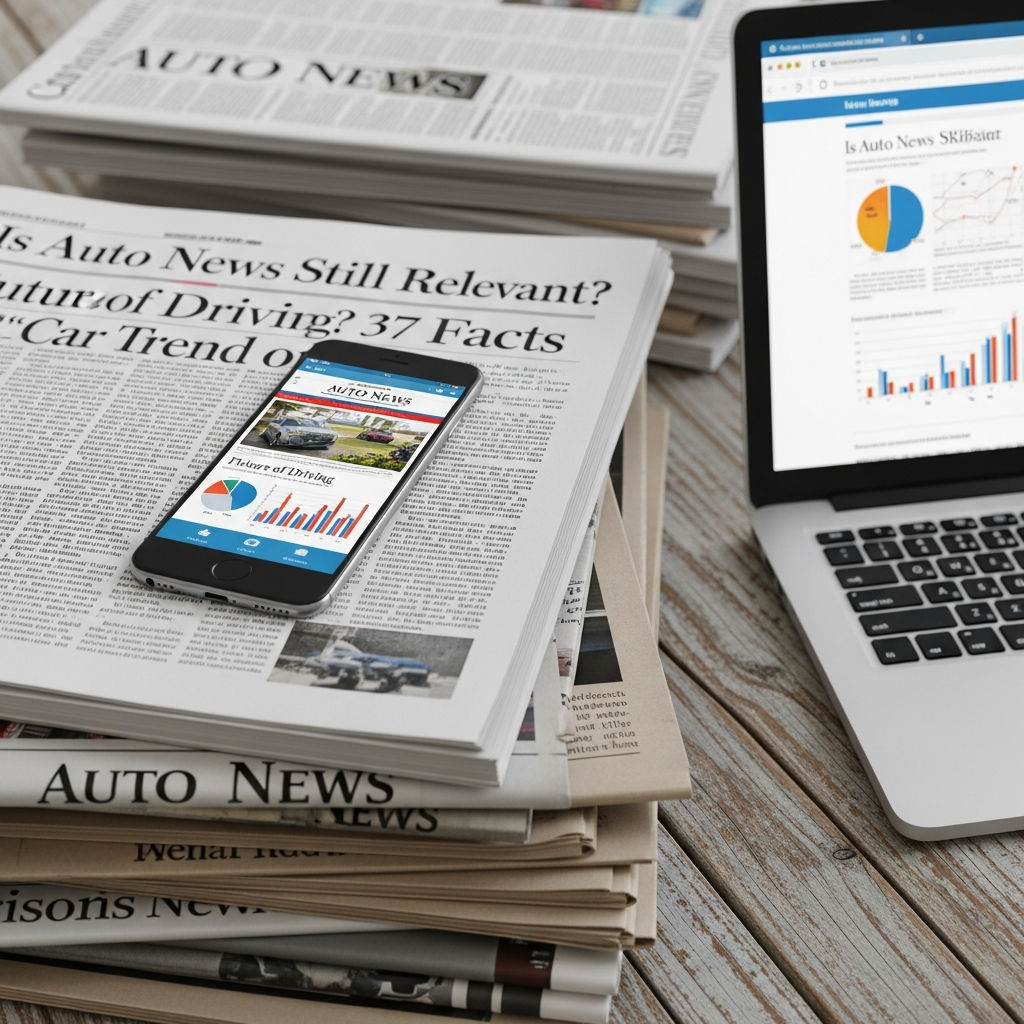
Is Auto News Still Relevant? 37 Facts About the Future of Automotive Journalism
In an era dominated by TikTok transitions, Instagram reels, and 280-character updates, the traditional landscape of automotive journalism has undergone a seismic shift. There was a time when a monthly subscription to a glossy magazine was the only way to know what was coming out of Detroit, Stuttgart, or Tokyo. Today, information travels faster than a Bugatti Chiron on a closed track.
But does this speed negate the need for “news”? Is auto news still relevant, or has it been replaced by influencer hype and manufacturer press releases? To answer this, we’ve compiled 37 facts that highlight the current state, the evolution, and the enduring necessity of automotive reporting in the 21st century.
The Evolution of Consumption: How We Read Auto News Today
1. Print is No Longer the Primary Medium
While legacy titles like Car and Driver and MotorTrend still maintain print editions, the vast majority of their readership—over 80%—comes from digital platforms. The “news” is now a 24/7 cycle rather than a monthly delivery.
2. The Rise of the Video Review
YouTube has become the modern showroom. Fact-based reporting has shifted toward visual storytelling, where “news” includes seeing the infotainment lag or hearing the exhaust note in high-fidelity audio.
3. “News” is Now “Tech News”
As cars become computers on wheels, the line between auto news and tech news has blurred. Outlets like The Verge and CNET now cover vehicle launches with the same intensity as a new iPhone.
4. Social Media as a Breaking News Wire
Twitter (X) and Threads have replaced wire services for breaking automotive news. When a CEO like Elon Musk tweets about a software update, that becomes the lead story for the next 48 hours.
5. Niche Blogs are Outperforming Generalists
General auto news is being challenged by hyper-specific sites. Whether it’s dedicated EV blogs or forums for specific brands (like Bimmerpost), readers are seeking specialized expertise over broad overviews.
6. The Death of the Traditional Auto Show
Major shows like Detroit and Geneva have seen declining attendance. Auto news is now “delivered” via private digital livestreams, making the journalist’s role as an on-site filter more important than ever.
7. Spy Shots Still Drive Massive Traffic
The mystery of what’s under the camouflage remains one of the highest-performing categories in auto news. Audiences still love the “scoop.”
8. The “Influencer” vs. “Journalist” Divide
There is a growing distinction between influencers (who focus on lifestyle and aesthetics) and journalists (who focus on testing and objective data). Relevance depends on which one the consumer trusts for a $50,000 purchase.
9. Podcasts are the New Commute Companion
Automotive news podcasts have seen a 30% year-over-year growth, allowing enthusiasts to digest industry analysis during their own time behind the wheel.
Buying Behavior: Why Consumers Still Need Auto News
10. 95% of Car Buyers Start Online
Before stepping foot on a lot, almost every buyer consults auto news and review sites to narrow down their choices.
11. Third-Party Validation is Crucial
Despite heavy manufacturer advertising, consumers trust independent news outlets 3x more than brand-owned content when it comes to reliability ratings.
12. The EV Learning Curve
Auto news is more relevant than ever because of the shift to Electric Vehicles (EVs). Consumers need news about charging infrastructure, battery degradation, and tax credits—information that didn’t exist 15 years ago.
13. Recalls and Safety Alerts
Journalism serves a public safety function. When a major recall happens, auto news outlets are the primary source for explaining the “why” and “how” to affected owners.
14. Real-World Range Testing
Manufacturer-claimed MPG or EV range is often optimistic. Independent “news” tests provide the real-world data consumers actually need.
15. Long-term Reliability Tracking
News outlets that perform 40,000-mile long-term tests offer insights that no brochure or 15-second TikTok can provide.
16. Pricing Transparency
With “market adjustments” and dealer markups becoming common, auto news sites that track MSRP versus actual transaction prices are highly relevant to the average shopper.
17. Comparison Tests Remain the Gold Standard
Side-by-side comparisons are the most-read articles in the industry. Knowing how a Honda CR-V stacks up against a Toyota RAV4 is a perennial news need.
The Industry Perspective: News as a Business Tool
18. Stock Market Volatility
Auto news isn’t just for buyers; it’s for investors. News regarding production delays or new battery technology can swing billions in market cap for companies like Tesla, Rivian, or Ford.
19. Supply Chain Reporting
The microchip shortage proved that “auto news” includes global logistics. Understanding why cars aren’t on lots became a mainstream news topic.

20. Regulatory Changes
Auto news outlets translate complex EPA regulations and government mandates into plain English, explaining how these laws will change what cars are available in five years.
21. The “China Threat” Coverage
The rise of Chinese automakers like BYD and Geely is a massive news story currently shaping Western trade policy and manufacturer strategies.
22. Autonomous Driving Progress
News regarding the legal and technical milestones of self-driving tech is essential for urban planning and insurance industries.
23. Used Car Market Insights
With the price of used cars skyrocketing, news regarding the Manheim Used Vehicle Value Index has become a staple for both dealers and consumers.
The Cultural Impact: Why We Still Care
24. Cars are the Second Largest Purchase
For most people, a home is the only thing more expensive than a car. As long as that remains true, people will consume news to protect their investment.
25. The “Drive to Survive” Effect
The surge in Formula 1 popularity has sparked a renewed interest in automotive performance news, linking racing technology to road cars.
26. Nostalgia and the Classic Car Market
News about auction results (e.g., Bring a Trailer) has turned car collecting into a mainstream spectator sport.
27. Car Design as Art
Analysis of design trends—the “big grille” era or the “minimalist EV interior”—remains a core part of cultural commentary.
28. Environmental Advocacy
Auto news now includes environmental reporting, holding manufacturers accountable for their carbon footprints and “greenwashing.”
The Tech Shift: 9 Facts on the Future of Reporting
29. AI-Generated Content is Rising
Some news “bulletins” regarding specs and prices are now being written by AI, forcing human journalists to provide more “opinion” and “flavor” to stay relevant.
30. Data Privacy is a New Beat
As cars collect more data, auto news is pivoting to cover cybersecurity and how much your car knows about you.
31. Over-the-Air (OTA) Updates
A car can change overnight via software. This means a car review from 2022 might be “fake news” by 2024, necessitating constant updates.
32. Virtual Reality Test Drives
The future of auto news may involve VR, where readers can “sit” in the car from their own homes while the journalist narrates.
33. Direct-to-Consumer Sales Models
As brands like Rivian and Lucid bypass dealers, the role of the news outlet as an “objective middleman” becomes even more critical for brand trust.
34. Subscription Services Coverage
News about BMW charging for heated seats or Mercedes-Benz locking horsepower behind a paywall has become a hot-button topic in modern auto reporting.
35. Hyper-Local News is Fading
While global auto news is thriving, local “dealership news” in newspapers is largely dead, replaced by online marketplaces.
36. Interactive Spec Tools
Modern auto news sites are becoming “tools” rather than just “articles,” offering calculators for EV savings or towing capacity.
37. The Human Connection
Despite all the technology, people still want to hear from experts they trust. The “relevance” of auto news ultimately rests on the personality and integrity of the people reporting it.
Conclusion: Is Auto News Still Relevant?
The answer is a resounding yes, but with a caveat: it has changed its form. Auto news is no longer just about horsepower and torque; it is about software, sustainability, global economics, and consumer rights. While the way we consume this news has shifted from the mailbox to the smartphone, the need for objective, expert analysis in the face of a rapidly changing industry has never been higher.
Whether you are a buyer trying to navigate the complex world of EV tax credits or an enthusiast watching the final days of the internal combustion engine, auto news remains the roadmap for the future of mobility.
About The Author
